


The outlook for U.S. interest rates has turned more hawkish following the speech of Kevin Warsh at Jackson Hole. Persistent inflation, loose financial conditions and growing support for tighter policy have raised the possibility of a 25 basis point rate hike in September. But the weakness in the labor market means the decision is not certain. The upcoming jobs and inflation reports will likely determine the next move for Fed. A rate hike may strengthen the U.S. dollar and place more pressure on EUR/USD while weaker economic data could support a rate hold and reverse some of the recent gains in US dollar.
September Fed Rate Hike Outlook Turns More Hawkish
The Fed’s July policy decision already provided a clear sign of shift within the Fed. The Fed officials kept rates unchanged by a 9-3 vote, but three of the members wanted an immediate 25 basis point increase. The meeting minutes also showed a preference for rate hike. The Warsh speech at Jackson Hole also presents the same message.
Persistent Inflation and Loose Financial Conditions Support a Hike
The inflation breadth is the reason for the turn. The number of products in the PCE basket with inflation rates greater than 3% over a 12-month period stood at 54%. The six-month headline PCE was also at 4.1%. This indicates that the inflation problem continues to grow, as this is not a small number of volatile items.
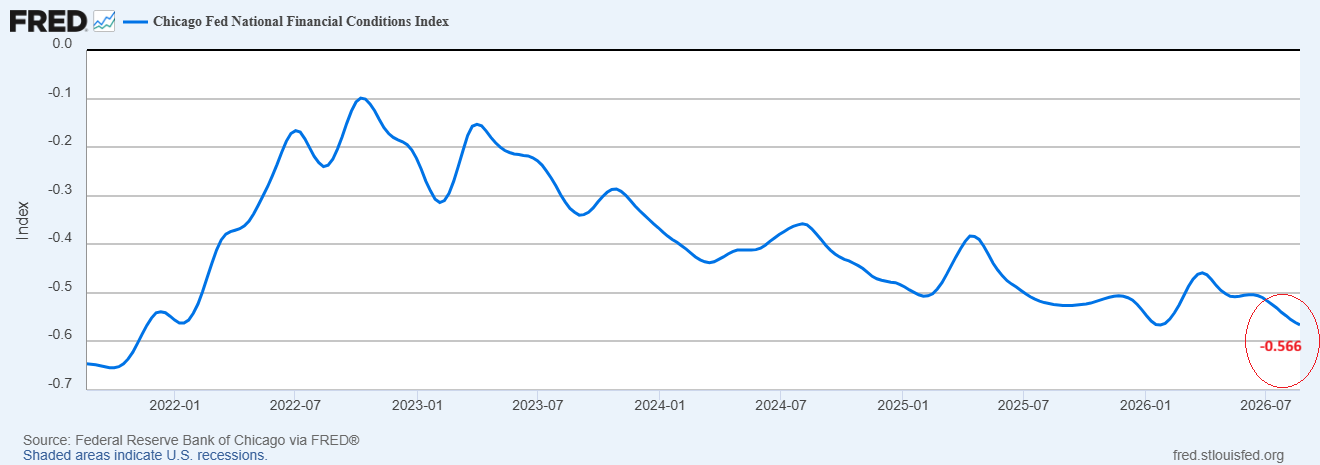
Warsh also suggested that general financial conditions were not restrictive as credit is still available. The spreads are narrow and private demand is strong. This is confirmed by the Chicago Fed National Financial Conditions Index which dropped to −0.561. The negative readings indicate that the financial conditions remain looser than the average.
EUR/USD Price Forecast
Every new EUR/USD analysis as it publishes, today's technical signal and key levels, live price — on one page.
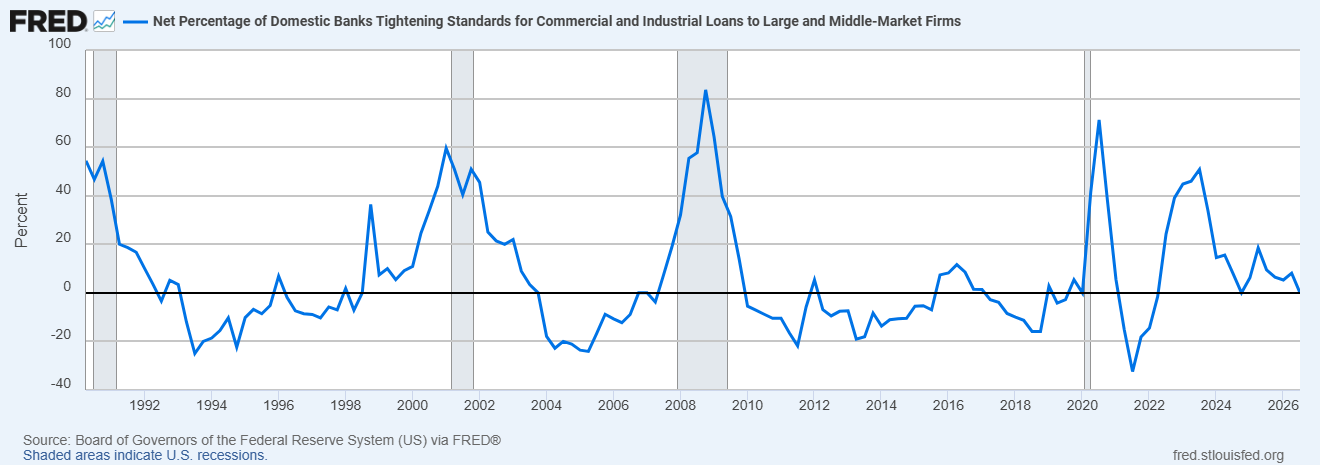
See all EUR/USD forecastsThe net percentage of banks tightening lending standards was 0% in Q3 2026 which shows no net tightening.
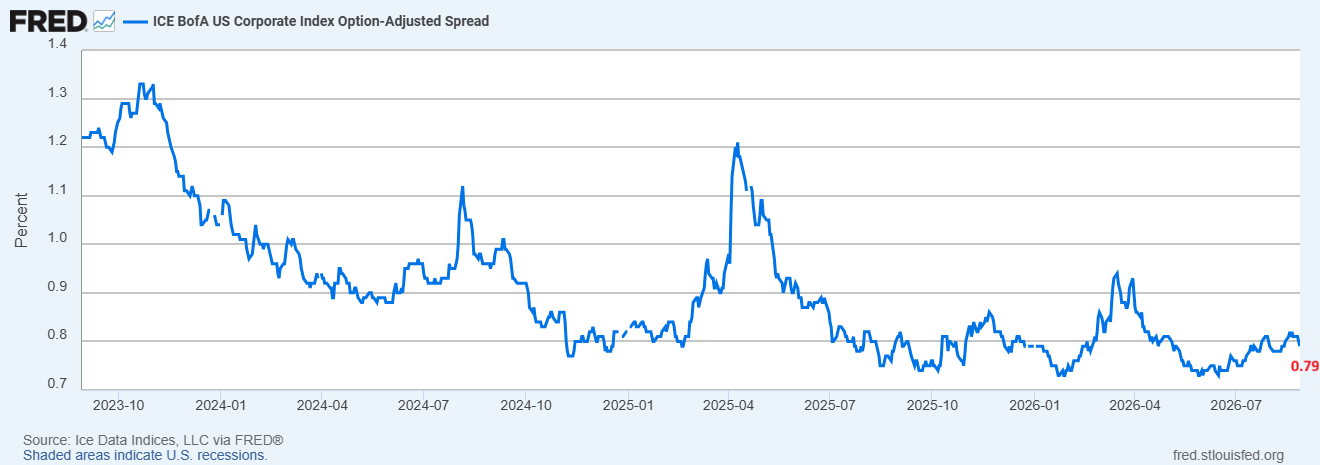
The chart below shows that the investment grade corporate spread was only 0.79%. This suggests limited concern about corporate credit risk. The Fed has more reason to hike the short term rate if policy is not working hard enough to cool demand.
Jobs and CPI Data Will Decide the September Fed Move
It is not possible to make high confidence call in the labour market. The payrolls in July contracted and previous job estimates were revised downward.
The September data are the August employment report on September 4, producer prices on September 10 and the CPI inflation report on September 11. All three reports are received prior to the September 15-16 meeting and the next PCE report will be released on September 30. The rebound in hiring and another strong CPI report would likely confirm a rate hike.
The weak jobs report and a drop in core inflation would favor a hold. But it would likely delay tightening rather than end the cycle. After the speech by Warsh, there is possibility of at least a quarter-point increase by December.
Fed Rate Hike Outlook Supports the US Dollar
Rising Treasury Yields Push the US Dollar Index Toward 100
Short term yield differentials are supporting the U.S. dollar as expectations of higher rates increase. The two-year Treasury yield rose following Warsh’s comments as this maturity is highly sensitive to Fed expectations. The U.S. dollar index also rose about 0.55% to 99.68. Strong capital inflows may be driven by higher expected returns on dollar assets and reduced incentives to buy lower-yielding currencies. The move in the two-year yield is therefore a cleaner signal for the dollar than a rise in long term yields.
The dollar still requires some support from the incoming data. The strong jobs report in August and sticky CPI inflation would increase the probability of a September hike and potentially push the US dollar index above the 100 handle. A weak payroll report would reduce the odds and could pull the index back toward the 98 area. The part of the hawkish Fed outlook is already reflected in the short term yields so the US dollar needs confirmation rather than another speech alone.
US Dollar Index Forecast Eyes 100.50 and 101.80
The monthly chart for the US dollar index shows that the index dropped toward the 98.50 support in August and rebounded strongly after the Jackson Hole meeting to close above the 10-month SMA. The 98.50 level was defined by the support of the ascending channel pattern that stretches from the April 2011 lows.
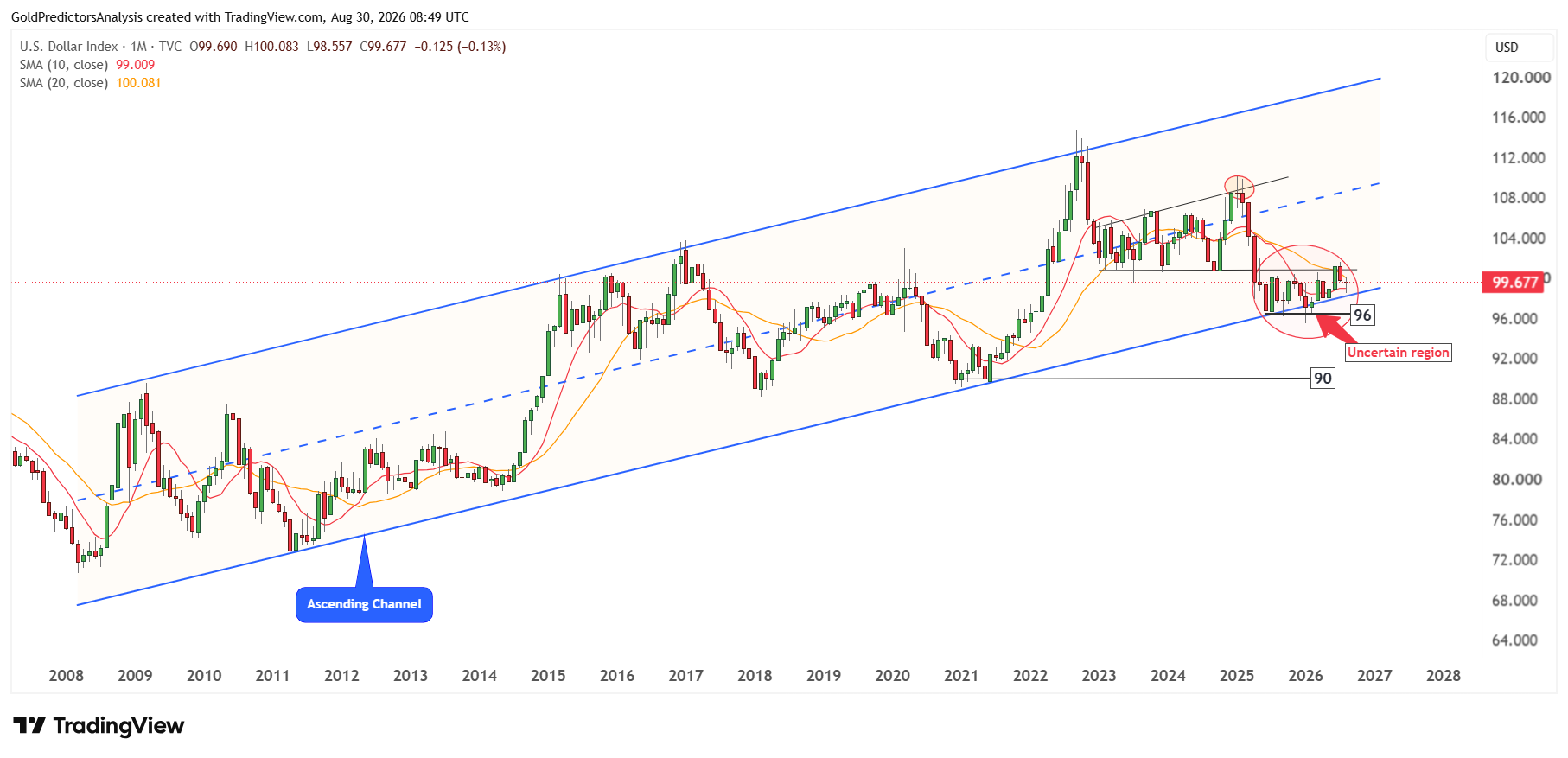
Overall, the price has been consolidating within the uncertain region between the 96 and 100 levels. A confirmed break of either level is required to define the next move. But the 10-month moving average remains below the 20-month moving average and the index still remains below the 100 level. This indicates a slightly negative bias in the long term. But a confirmed break above 101.50 will likely open the way for a short term rally in the US dollar index. The higher interest rate environment will likely support this outlook.
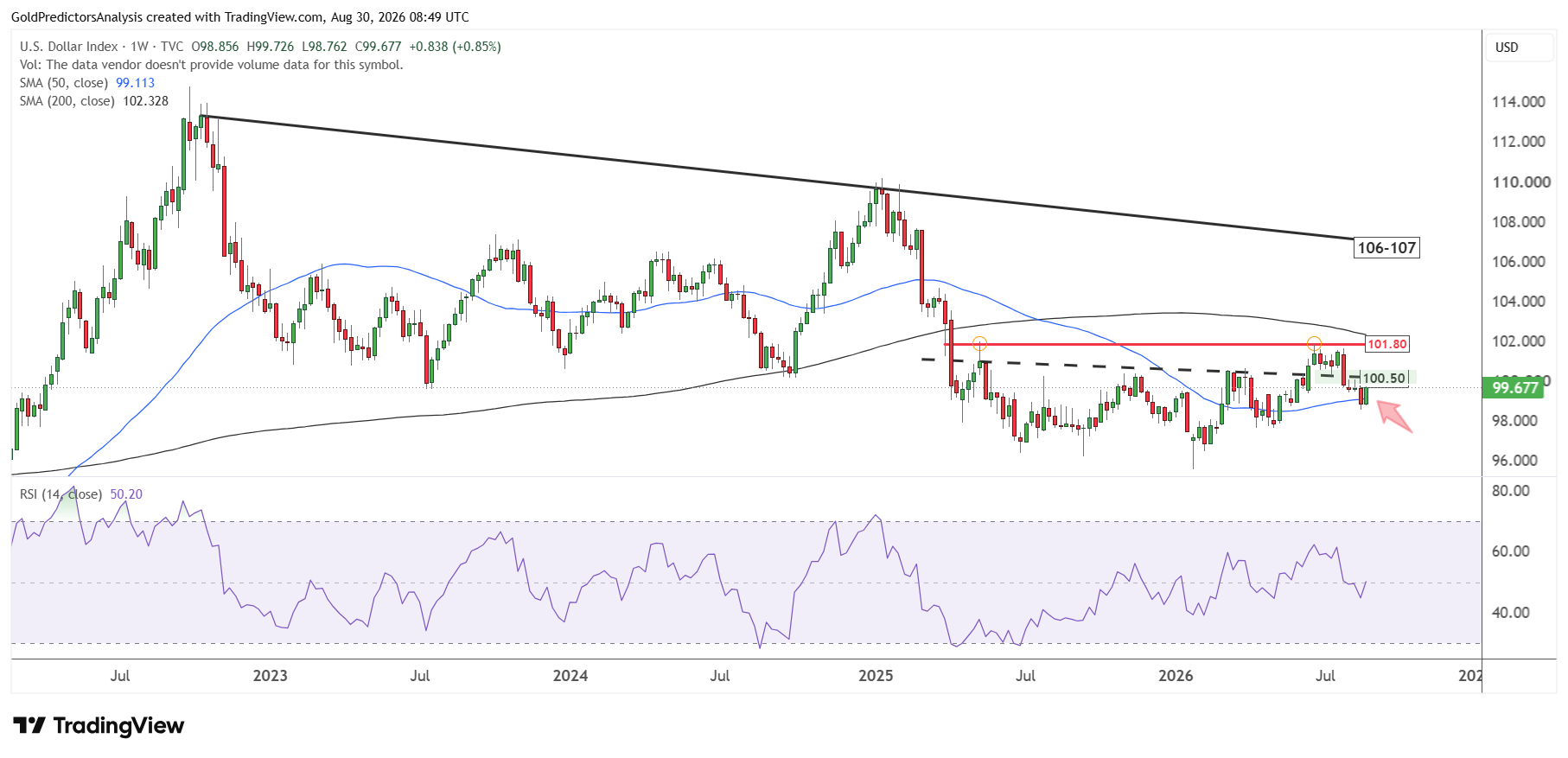
The weekly chart shows that the index failed to maintain the negative bias and rebounded strongly last week to close at 99.60. This positive reversal from the 50-week average produced a weekly reversal candle. Therefore, a break above 100.50 is required to push the index toward 101.80. A confirmed break above 101.80 will likely open the way toward 106. This level is the resistance of the descending trend line that stretches from the October 2022 highs.
EUR/USD Forecast Faces Pressure as Fed Hike Odds Rise
Fed-ECB Rate Gap Keeps Pressure on EUR/USD
EUR/USD edged down by approximately 0.63% to 1.1578 after Warsh’s speech as traders reassessed their views for a rate hike by the U.S. central bank. The Fed’s target midpoint is now 3.625%, and the European Central Bank’s (ECB) deposit rate is currently 2.25%. This equates to a rough policy gap of approximately 138 basis points in favour of the dollar.
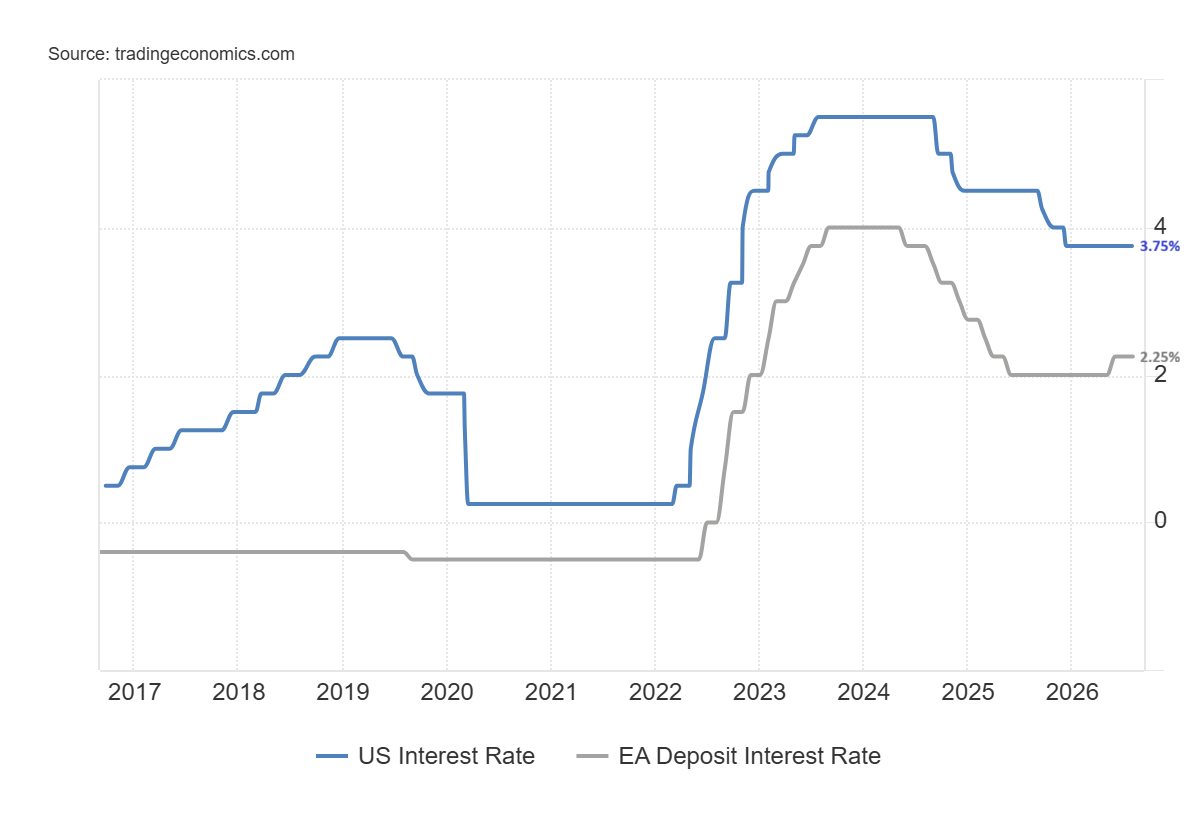
The hawkish Fed with no ECB move would push that spread to around 163 basis points and further pressure EUR/USD. But the ECB is also at risk of inflation. It had increased in June and kept steady in July and the latest meeting minutes indicated that it could move again if the inflation outlook improves.
The rate outlook thus brings three clear EUR/USD scenarios. A Fed hike and the ECB hold would favor a move below 1.15 with 1.14 becoming the next area to watch. If both central banks raise their policy rates by 25 bps, the policy gap would be largely unchanged and guidance would determine the next step. A move higher from the ECB and a Fed hold would be bullish for a recovery above 1.18. For now, the September forecast is slightly in the dollar’s favor as U.S. rate expectations shifted more drastically following Jackson Hole. The August U.S. jobs and inflation figures will determine whether that edge will hold.
EUR/USD Technical Analysis Tests 1.1490 Support
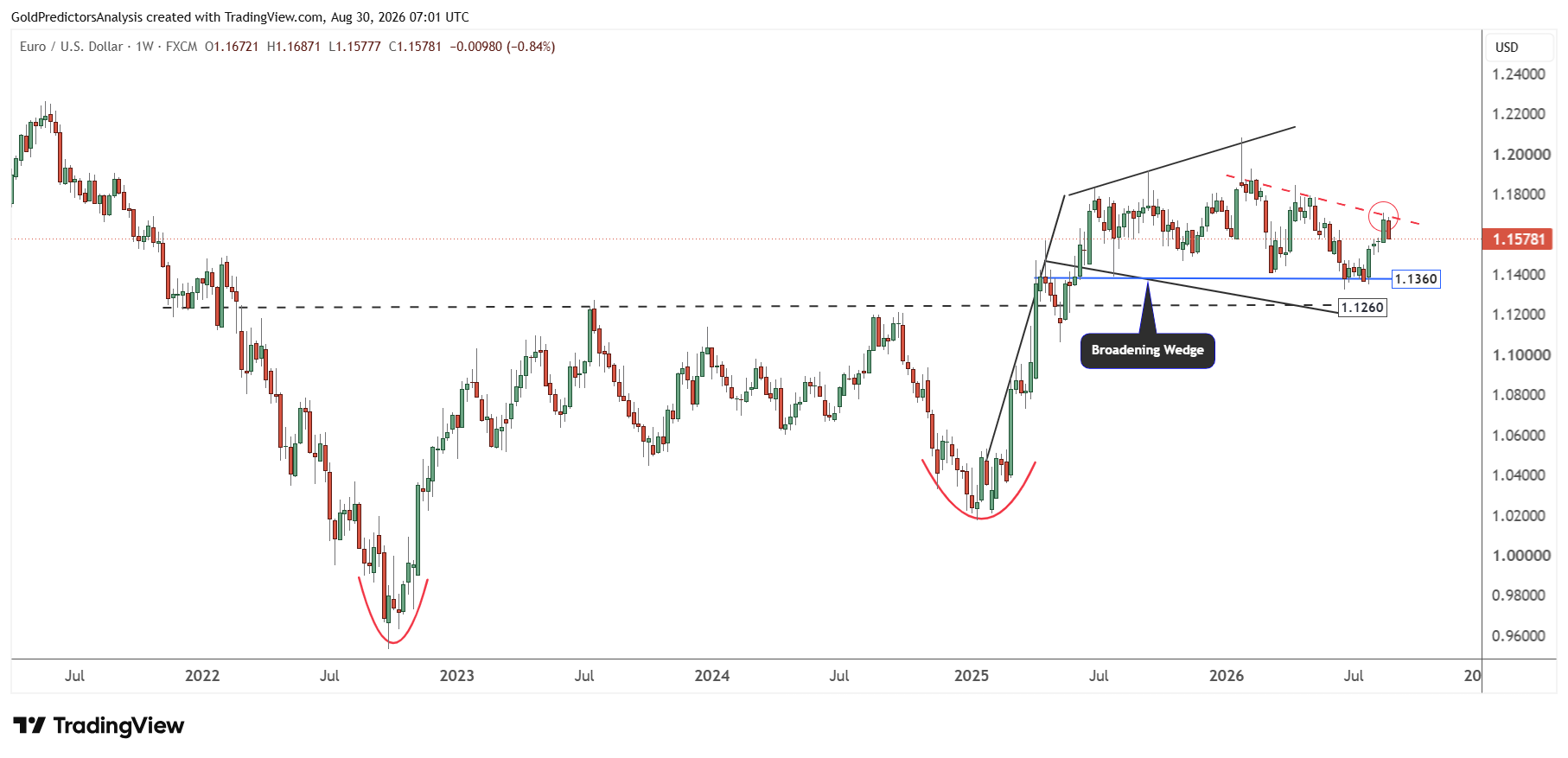
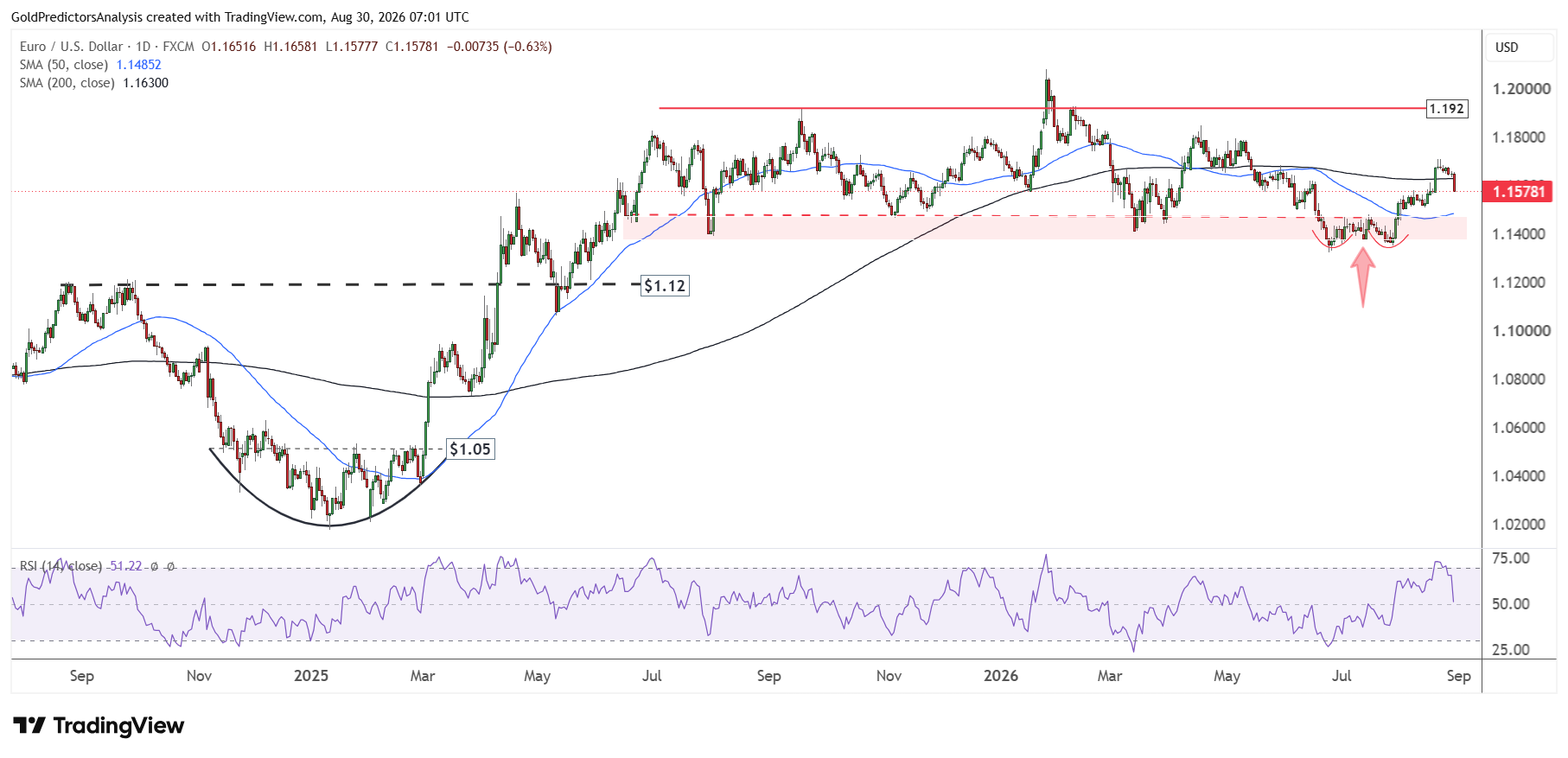
The strong uncertainty in the US dollar index has created strong consolidation in EUR/USD. But EUR/USD still remains above the 1.1360 level. The pair found strong resistance last week at the descending trend line that stretches from the January 2026 highs. The reversal in the US dollar index produced a weekly reversal candle in EUR/USD exactly at the resistance area.
This indicates a negative move in EUR/USD next week. A break above 1.17 in EUR/USD is required to push the pair toward 1.18 as the next immediate resistance. But the 1.1360-1.14 region remains the key support area for EUR/USD. The pair has been trading within a broadening wedge pattern. Therefore, wide ranges are possible due to the heavy volatility in the currency market.
The daily chart for EUR/USD also shows a double bottom pattern in June and July at the 1.1360 support level. But the pair failed to hold above the 200-day SMA and broke below this level. The immediate support now remains the 50-day SMA at 1.15. As long as this support holds, the possibility of another rally in EUR/USD is higher. But a break below 1.15 will likely trigger another drop toward the 1.13 level.
September Fed Decision Will Guide the Next US Dollar Move
The interest rate outlook for September now favors the 25 basis point hike but the decision remains uncertain. The speech by Warsh at Jackson Hole, broad inflation pressures and loose financial conditions support the tighter policy. But the weak labor market may keep the Fed on hold. The strong payrolls and another firm CPI report would strengthen the case for a hike. But weak employment or inflation data may support a pause.
The interest rate hike would likely support the US dollar and pressure EUR/USD. The US dollar index must break the 100.50 level to extend the recovery to 101.80. Meanwhile, EUR/USD remains vulnerable below 1.17 while 1.15 and 1.1360 are the main support levels. The upcoming jobs and inflation data will determine the next move in the US dollar and EUR/USD.
Read more: How a BOJ September Rate Hike Could Impact Yen Pairs