Gold Stalls Below $4,435.25 as Yields and Oil Rebuild the Rate Trade
Gold reached a two-month high Tuesday morning and gave it right back. The rally to $4,435.25 ran into rising Treasury yields and a bond market that is not ready to let the September rate hike die after one weak jobs report. Oil climbing toward $90 is putting inflation expectations back in front of the Fed, and that combination stalled gold just as it crossed above a key retracement level. The pullback is not about the Middle East bid fading. It is about the rate trade reasserting itself ahead of Wednesday’s CPI.
At 12:08 GMT, Spot Gold was trading at $4,385.66, down $4.58 or 0.10%. Earlier in the session, XAUUSD reached $4,435.25.
Buyers proved they still want gold when the rate outlook softens and Hormuz risk stays unresolved. The failure to hold the high proved that yields are not done pushing back.
Daily Spot Gold Technical Analysis
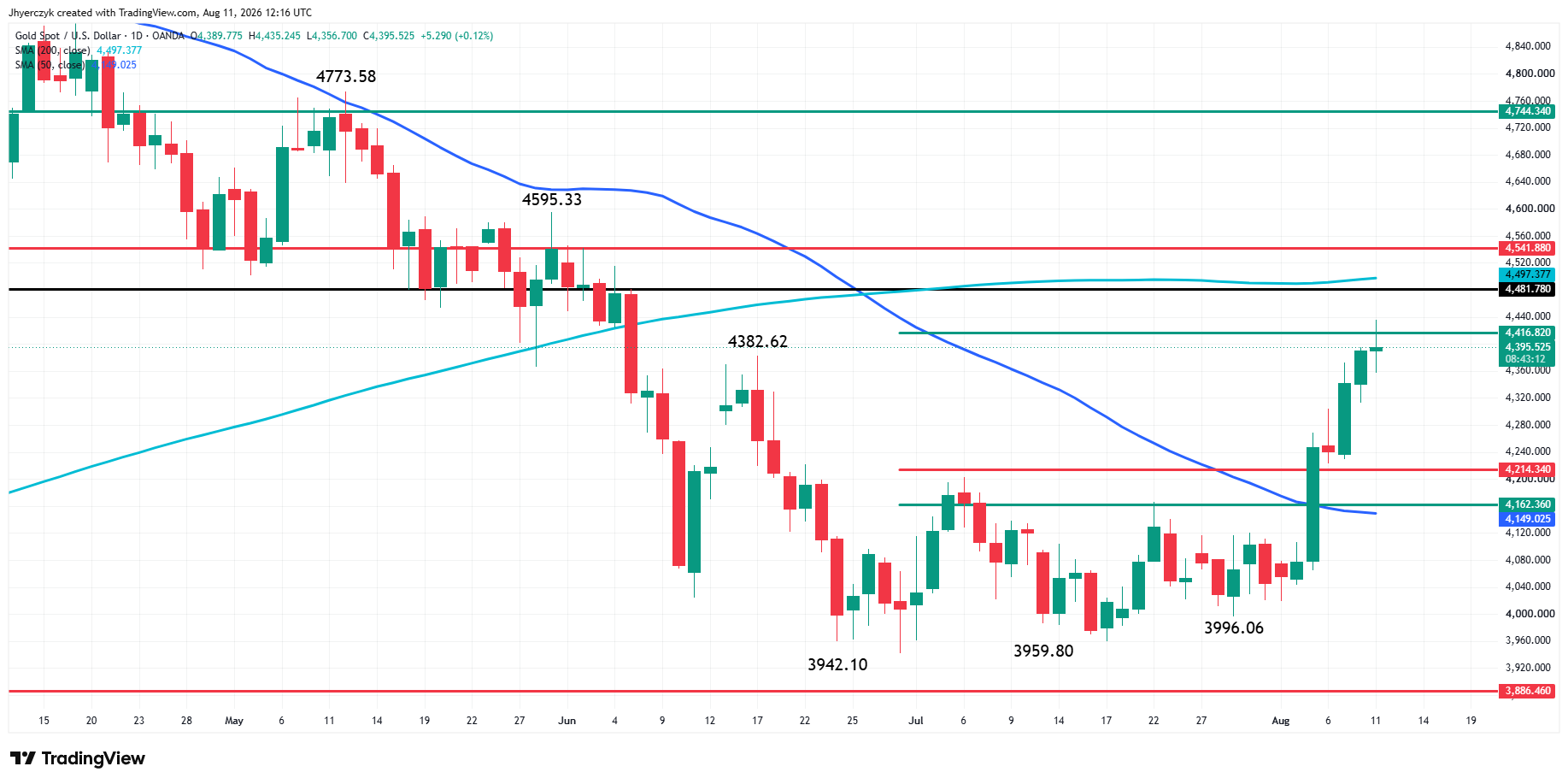
Spot gold reaffirmed its uptrend early Tuesday with a spike into $4435.25. This was its highest level since June 5. The early breakout crossed to the strong side of a 50% level at $4416.82, but the buying dried up and the market fell back below it. The early price action suggests that trader reaction to $4416.82 could set the tone into the close.
A sustained move over $4416.82 will signal the presence of buyers. If this move generates enough upside momentum then look for the surge to continue into $4481.78 and the 200-day moving average at $4497.39. Spot gold has traded below the 200-day MA since June 5, so overtaking it will essentially erase two months of weakness.
The level at $4481.78 is interesting. It represents 20% down from the all-time high at $5602.23 or the point at which conventional analysis says the bear market began. Overcoming it could mean the bear market is over, but that doesn’t mean a bull market has begun.
On the downside, a sustained move under $4416.82 could indicate the buying is weakening or the selling is strengthening. The more important number is yesterday’s close at $4390.23. A close below this price will form a potentially bearish closing price reversal top. This could be the first sign of an impending 50% to 61.8% correction of the rally from $3942.10.
Gold Price Forecast
Every new Gold analysis as it publishes, today's technical signal and key levels, live price — on one page.
See all Gold forecastsFriday’s Rate Relief Is Already Leaking Out of the Market
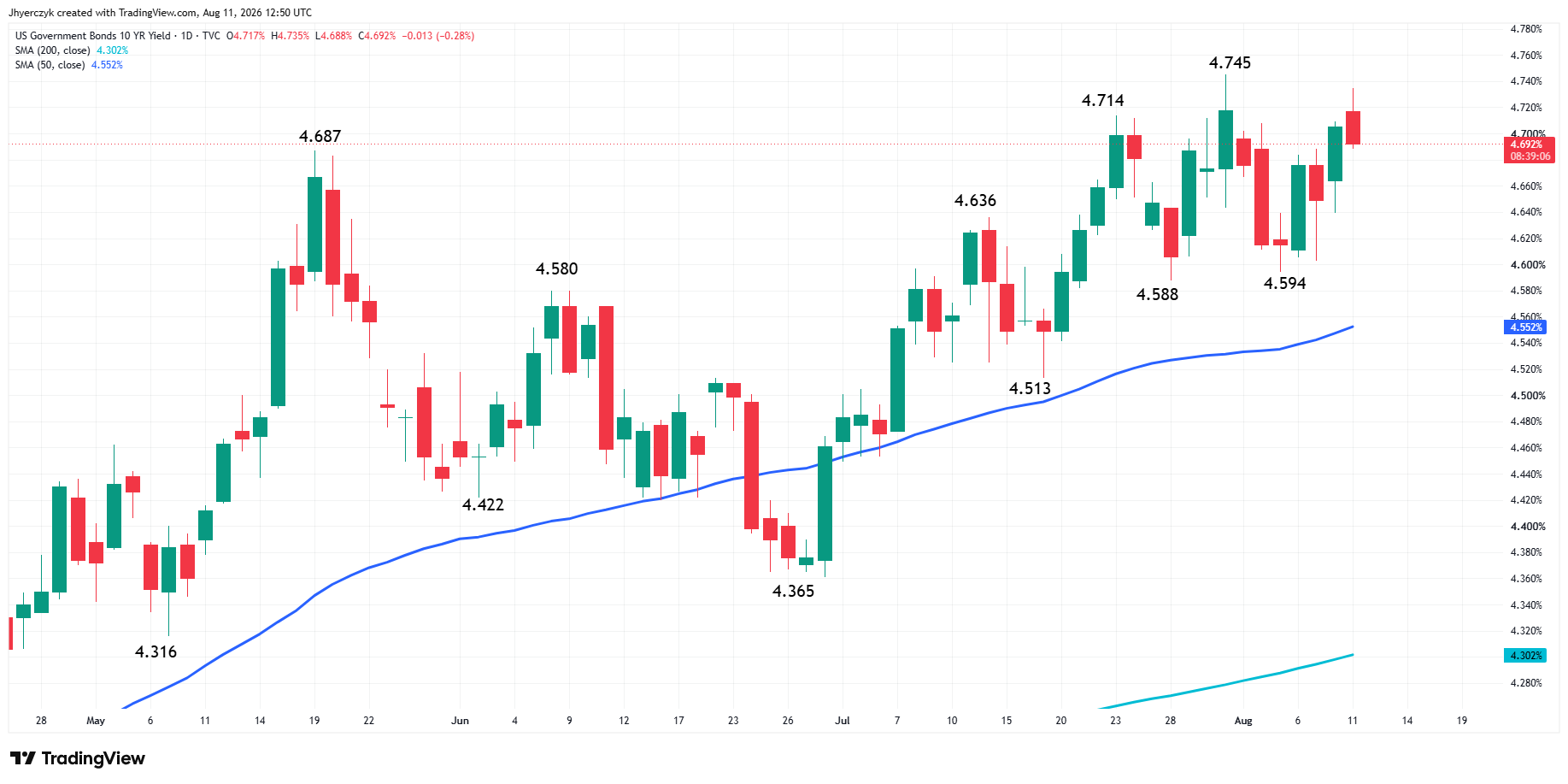
The 10-year Treasury yield climbed to 4.73%, its highest in more than a week. The two-year reached 4.26% and the 30-year moved to 5.28%. Gold rallied hard last week because the July payrolls report contracted, wage growth slowed and traders started pulling the September hike off the table. That was real money coming into the metal on a real shift in rate expectations.
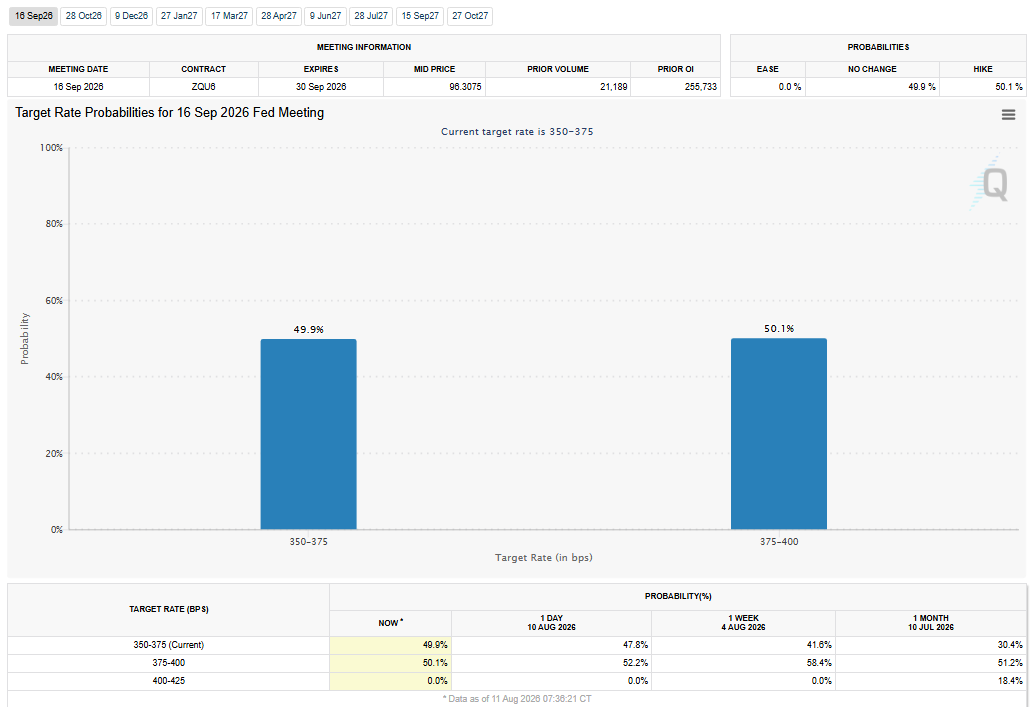
The bond market is taking that shift back. September hike odds rose to 48% Tuesday from 44% Monday. The move is small but the direction matters. Gold ran on the idea that the jobs data had settled the rate question. Yields climbing Tuesday say the bond market wants to see inflation data before it agrees.
Cleveland Fed President Beth Hammack reinforced that Monday, saying the time was right to begin raising rates gradually rather than risk sharper increases later. The hawkish side of the Fed did not disappear after the payrolls miss. It just went quiet for a few sessions.
Oil Near $90 Is Doing the Fed’s Work for It
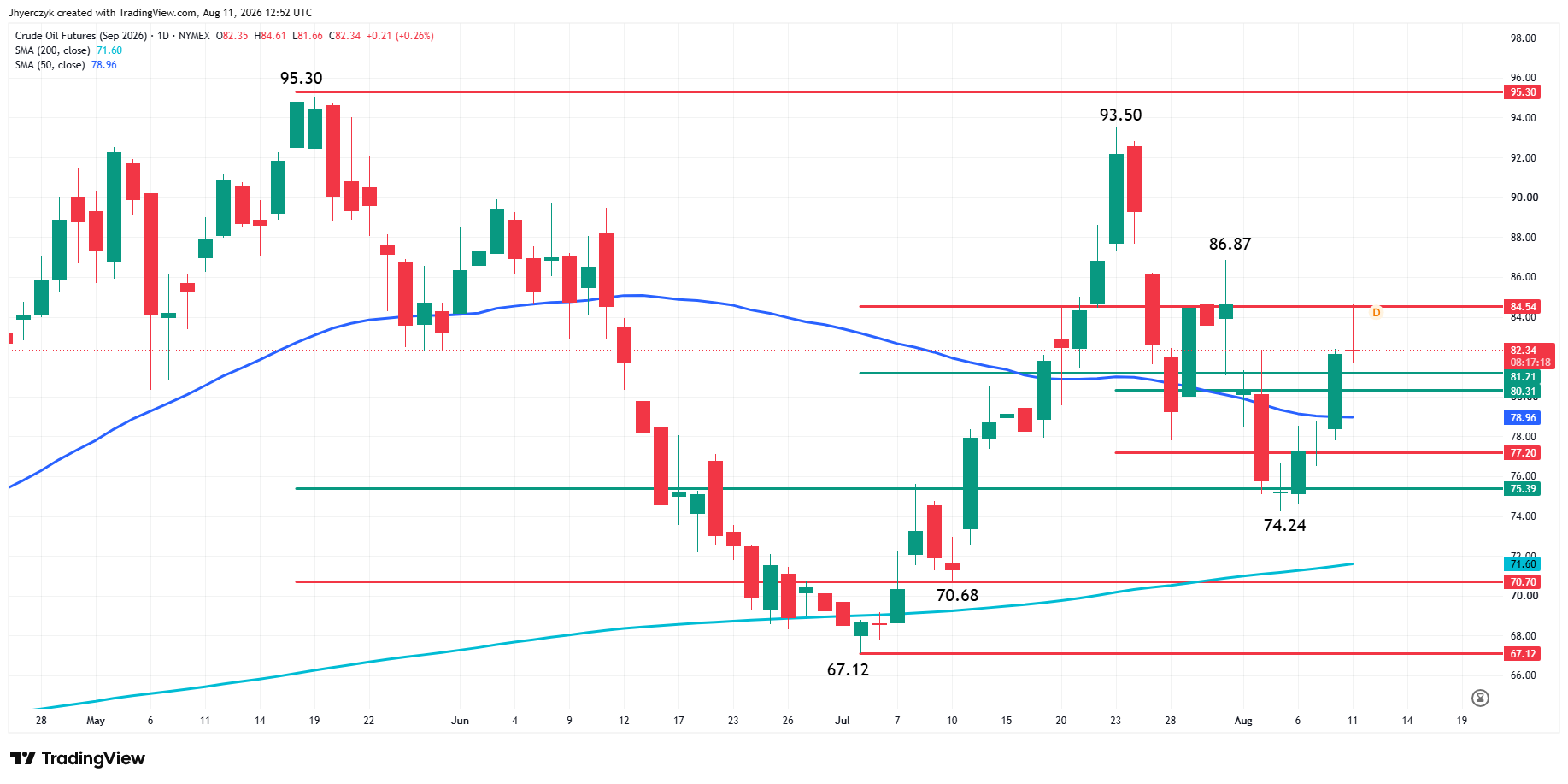
WTI crude near $83.58 and Brent near $89.25 are not helping gold the way a geopolitical bid normally would. The Hormuz reopening trade collapsed, both benchmarks are climbing for a fourth straight session, and the energy rally is feeding straight into inflation expectations. That gives the Fed cover to keep policy tight regardless of what the labor market showed Friday.
Gold does not need the Hormuz situation to resolve. It needs oil to stop giving the Fed a reason to keep talking about hikes. Those are different problems and right now oil is making the second one worse.
CPI Wednesday Decides Which Side Controls the Trade
The dollar is flat near 99.84, which leaves gold without a currency tailwind or a major headwind. Everything is waiting on the same number.
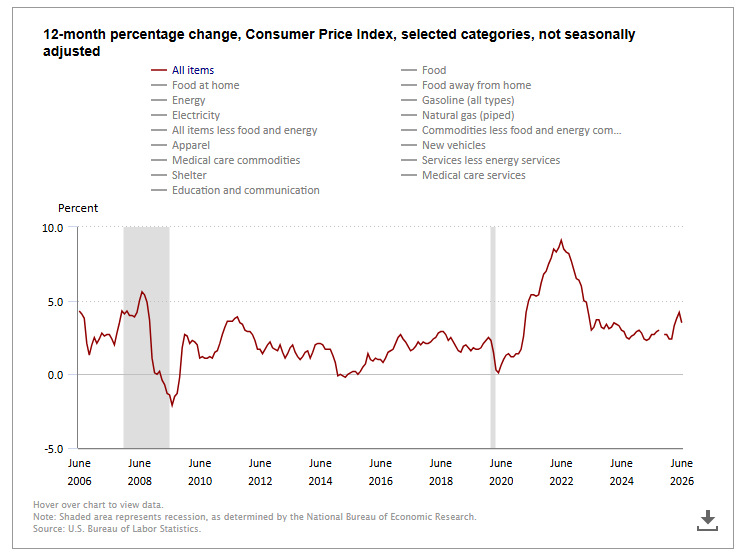
A soft CPI print weakens the dollar, pulls yields lower and puts pressure back on September hike odds. That is the combination that gives gold another run at the morning high. A hot print with oil near $90 and yields already above 4.70% gives sellers a reason to press. Producer prices follow Thursday and retail sales land Friday. The market gets three chances this week to reassess whether inflation is cooling or whether higher energy is working its way through.
Structural demand and returning Western buyers are holding gold above the correction lows. Those are supports underneath the market, not catalysts above it. The catalyst is CPI.
What to Watch
Gold hit $4,435.25 Tuesday because the rate outlook had softened and Hormuz risk was still in the market. It pulled back because yields and hike odds climbed with oil. CPI Wednesday is the deciding print. A soft number reopens the trade that carried gold to the morning high. A hot number with crude near $90 gives the bond market permission to keep pushing yields higher, and gold has shown this week it cannot hold rallies against that pressure.
The failed push above the retracement level Tuesday left gold between the morning high and Monday’s close. A hold above that close keeps the uptrend intact. A close below it forms a reversal pattern that points toward a deeper correction off the recent rally.
If you’d like to know more about how to trade gold, please visit our educational area.