The Nasdaq 100 formed a strong bullish price action last week and showed compression at the resistance as investors reacted to softer inflation pressures and strong AI-related earnings. The short term outlook remains positive but the market is becoming more selective. The latest inflation data has reduced the immediate interest rate risk. At the same time, sharp post-earnings declines in several technology stocks show that high valuations leave little room for disappointment.
Maria Agustina Patti, Financial Markets Strategist at Exness, commented:

The backdrop for technology stocks has improved as inflation cools and demand for AI remains strong. But investors are also becoming harder to impress. Even companies reporting solid results can face pressure if expectations were already very high. This means markets are likely to keep a close eye on inflation, interest-rate expectations and whether AI companies can continue to deliver the growth investors have come to expect.
Cooling July CPI Supports the Nasdaq 100
U.S. inflation slowed for a second straight month in July. The annual inflation eased to 3.4% in July from the 3.5% in June. The core inflation also eased to 2.5% from the 2.6% in June. These inflation readings were in line with the market expectations. The data has reduced the immediate risk of hot inflation surprise.
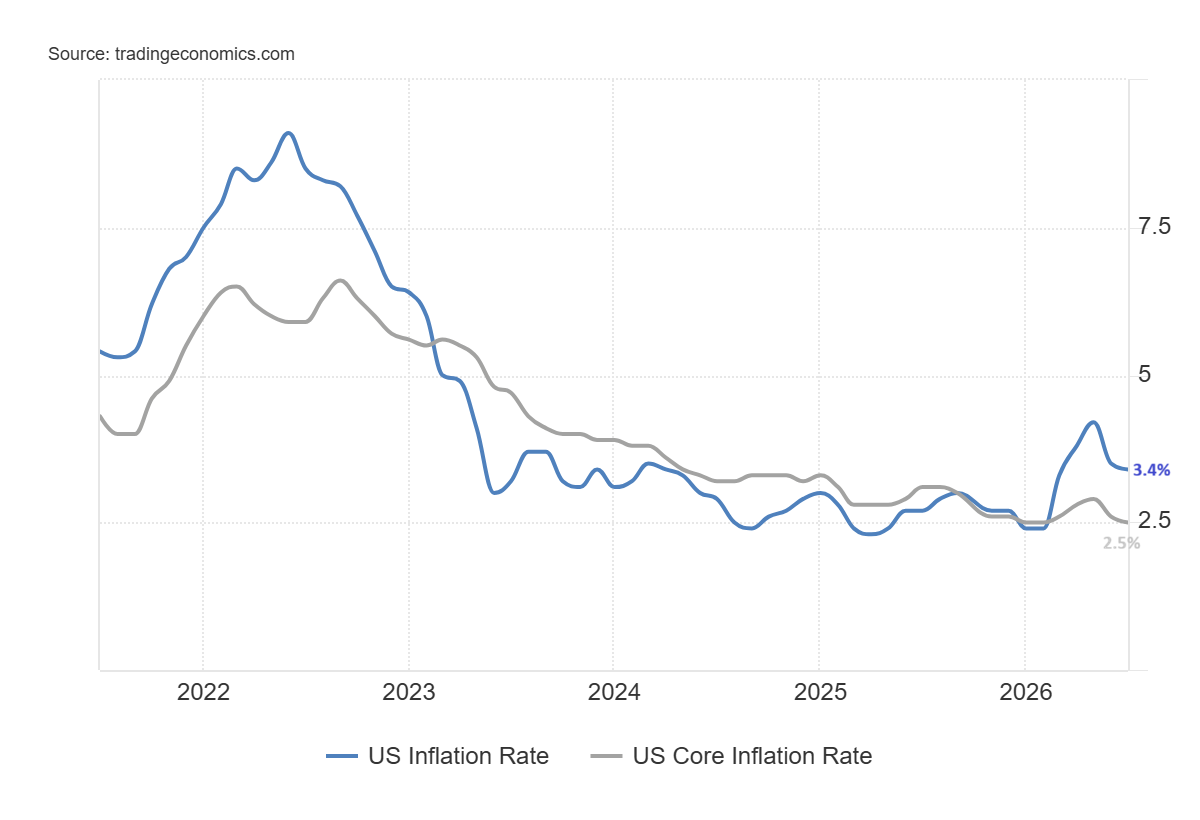
The energy prices decreased 1.5%, driven by a 2.9% drop in gasoline prices. The shelter prices increased just 0.1%. The price of services excluding energy increased by 0.2% and food prices increased by 0.1%. These are indications that the domestic price pressures are easing. But it has not disappeared.
The inflation data supported the Nasdaq index as tech stocks are sensitive to interest rates. The lower inflation reduces the expectations of the interest rate hike in September. The softer inflation data may keep the Treasury rates down and lift the value of the future tech sector. Following the CPI, the probability of rate hike in September dropped to 36%.
NASDAQ 100 Price Forecast
Every new NASDAQ 100 analysis as it publishes, today's technical signal and key levels, live price — on one page.
See all NASDAQ 100 forecastsBroader Inflation Pressures Keep Fed Rate Risks Alive
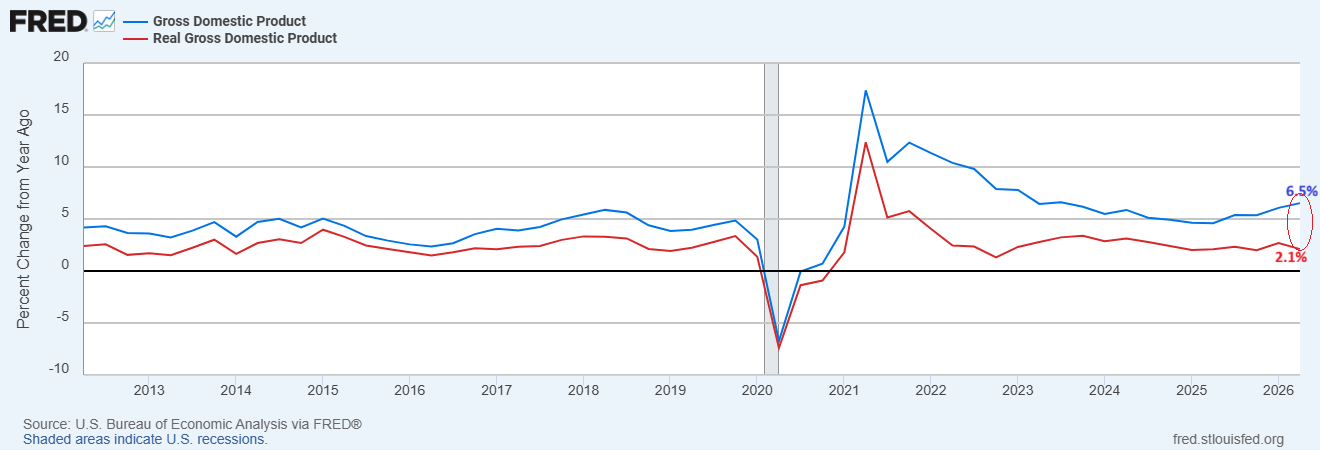
The broader inflation risk after the US-Iran conflict still persists. The chart below shows that nominal GDP grew by 6.5% year over year in the second quarter while real GDP grew by only 2.1%. This wide gap means that higher prices produced large share of the growth in dollar terms. This creates a mixed outlook for Nasdaq. The softer CPI reduces the immediate risk of another interest rate hike but the broader data still limit the case for lower rates in future.
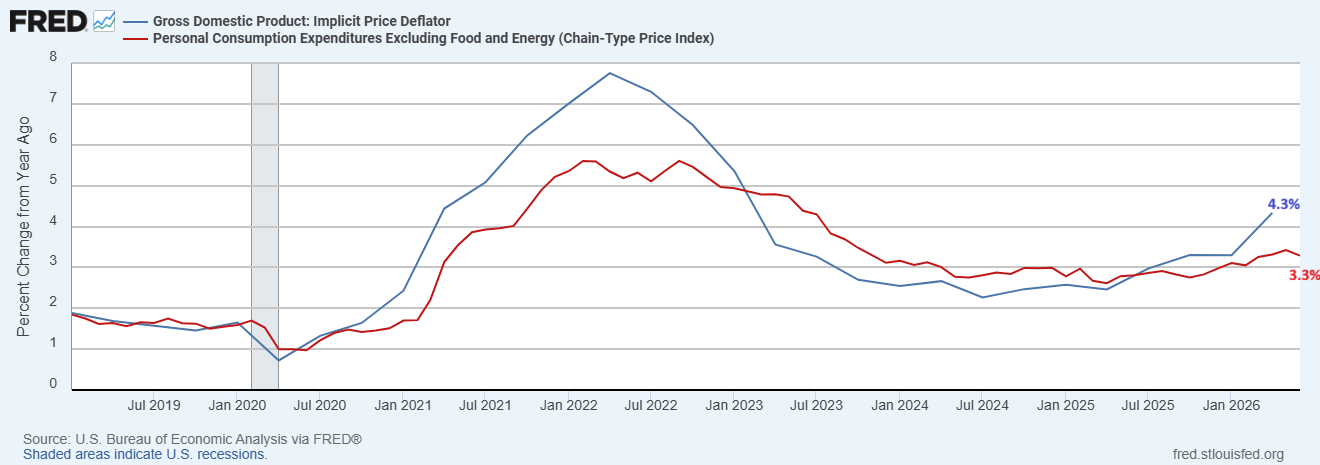
The GDP implicit price deflator further supports this view. It increased by 4.3% from a year earlier in Q2. This was the largest annual increase since early 2023. The price index for gross domestic purchases also increased at annualized rate of 5.7%. These measures cover wider part of the economy than consumer inflation alone. They suggest that the improvement in July CPI may not reflect the complete decline in price pressure. If the broader inflation measures remain firm, the Federal Reserve may need to keep rates high for longer.
Strong AI Earnings Support the Nasdaq 100
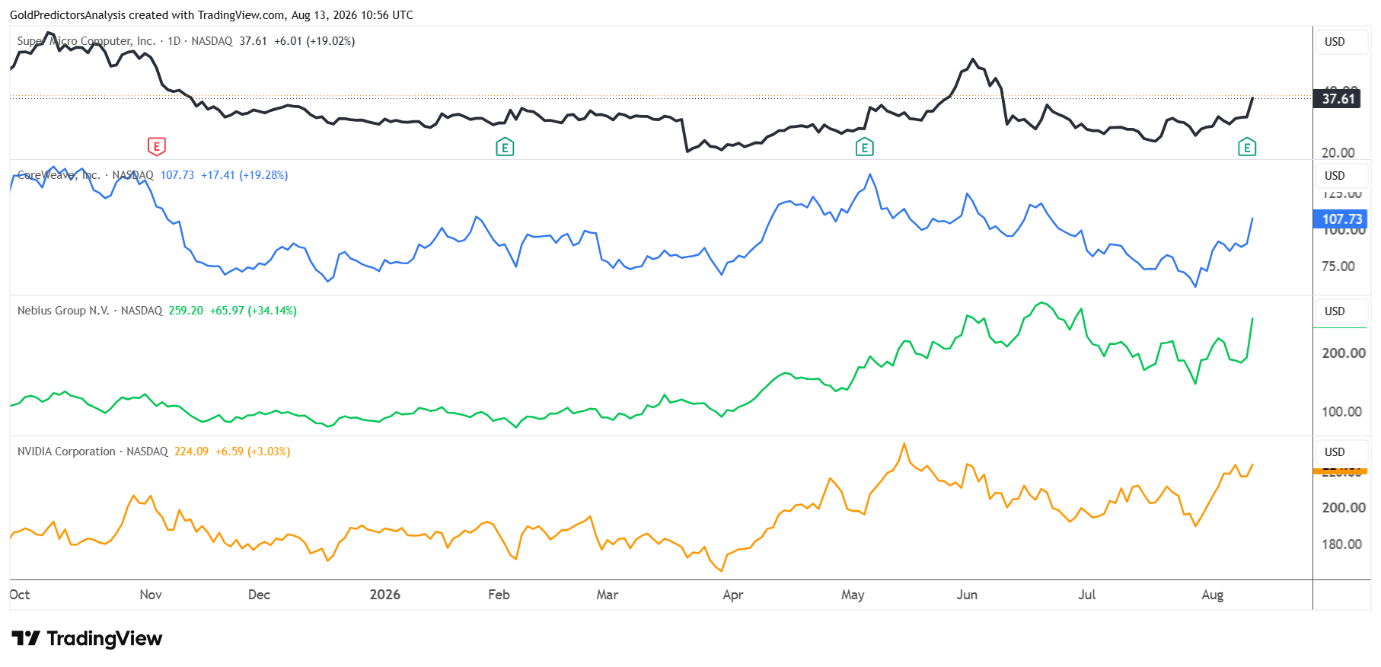
The Nasdaq continues to rally on strength in AI stocks on Wednesday. CoreWeave Inc. (CRWV) rose 19% on improved estimates of earnings and an increase in annual capital expenditures. Nebius Group (NBIS) has jumped 34% because of better results. Super Micro Computer, Inc. (SMCI) also jumped 19% on a strong fiscal 2027 revenue outlook. Nvidia’s stock climbed 3%, Micron Technology Inc. (MU) jumped 4.9% while the PHLX Semiconductor Index jumped by approximately 2.5%. The wins indicate that investment in AI servers, chips, cloud infrastructure and data centers remains solid.
The long term demand narrative was supported by Cisco. The Q4 fiscal revenue grew 18% to $17.3 billion with adjusted earnings up 23% to $1.22 per share. The company has picked up $4 billion worth of orders for AI infrastructure from hyperscalers in the quarter. This brought its yearly total to $9.3 billion. Cisco also expects about $7.5 billion of AI infrastructure revenue in fiscal 2027. But its stock price dropped over 4% in the extended trading.
Other results also send the same warning. Coherent generated $2.05 billion in quarterly revenue, a 34% increase and adjusted profit of $1.74 per share. It also provided a robust revenue and profit outlook for the current quarter.
The strong AI spending and softer inflation suggest the short term upside potential for Nasdaq. The primary risks continue to be high valuations and margin pressure.
Nasdaq 100 Targets 35,000 Above 30,600
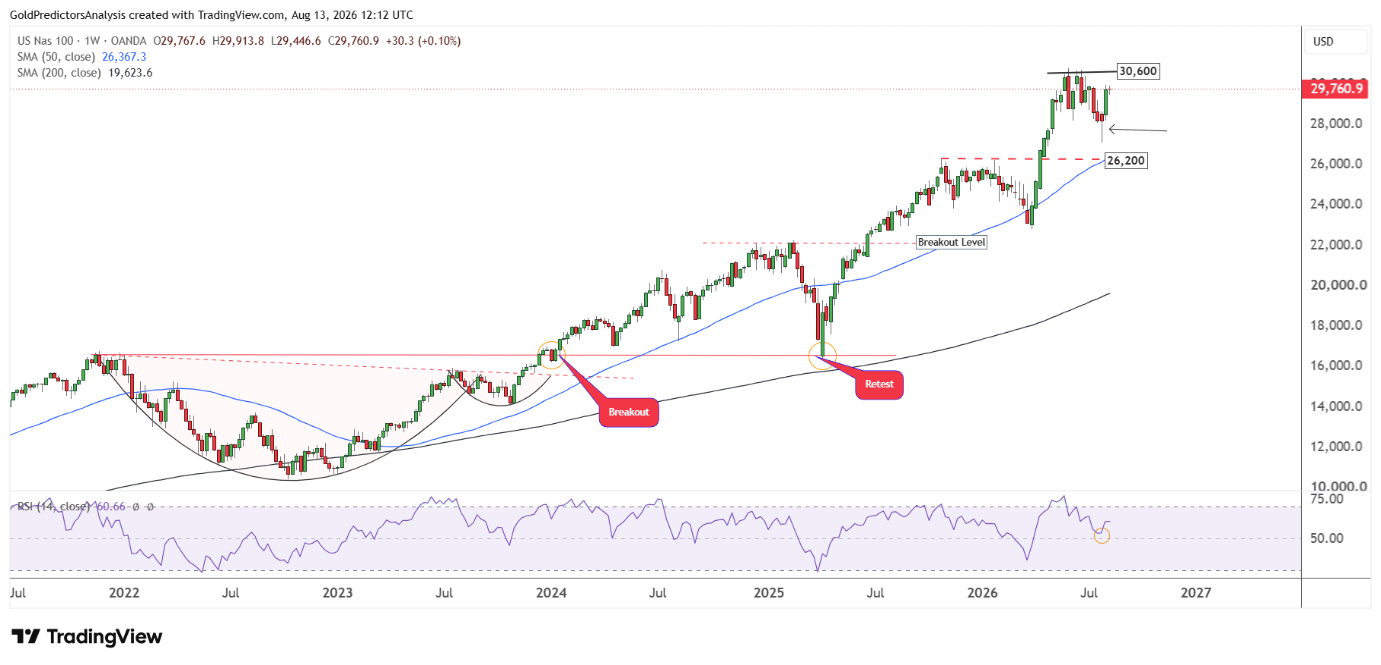
The long term outlook for the Nasdaq 100 Index remains strongly bullish as seen in the weekly chart below. The index formed strong support at the 27,000 level during the last week of July 2026 and produced a sharp shadow on the weekly candle.
This produced a strong surge in the index towards the 30,000 level in the first week of August. The recent surge indicates that the index will likely break the 30,600 resistance soon. The emergence of a cup and handle pattern from 2021 to 2023 and the formation of V-shaped recoveries in April 2025 and April 2026 suggest a strong bullish momentum. This indicates that the index will likely continue to surge during the next few weeks. Moreover, the RSI is also rebounding from the midline, which indicates the possibility of continued upside.
This positive momentum is also observed on the daily chart, which shows that the index formed a broadening wedge pattern from June 2026 to July 2026. The index dropped and found strong support at 27,000 at the lower boundary of this wedge pattern. The index has now reached the resistance of the broadening wedge pattern and is consolidating at this level. This consolidation suggests positive price compression.
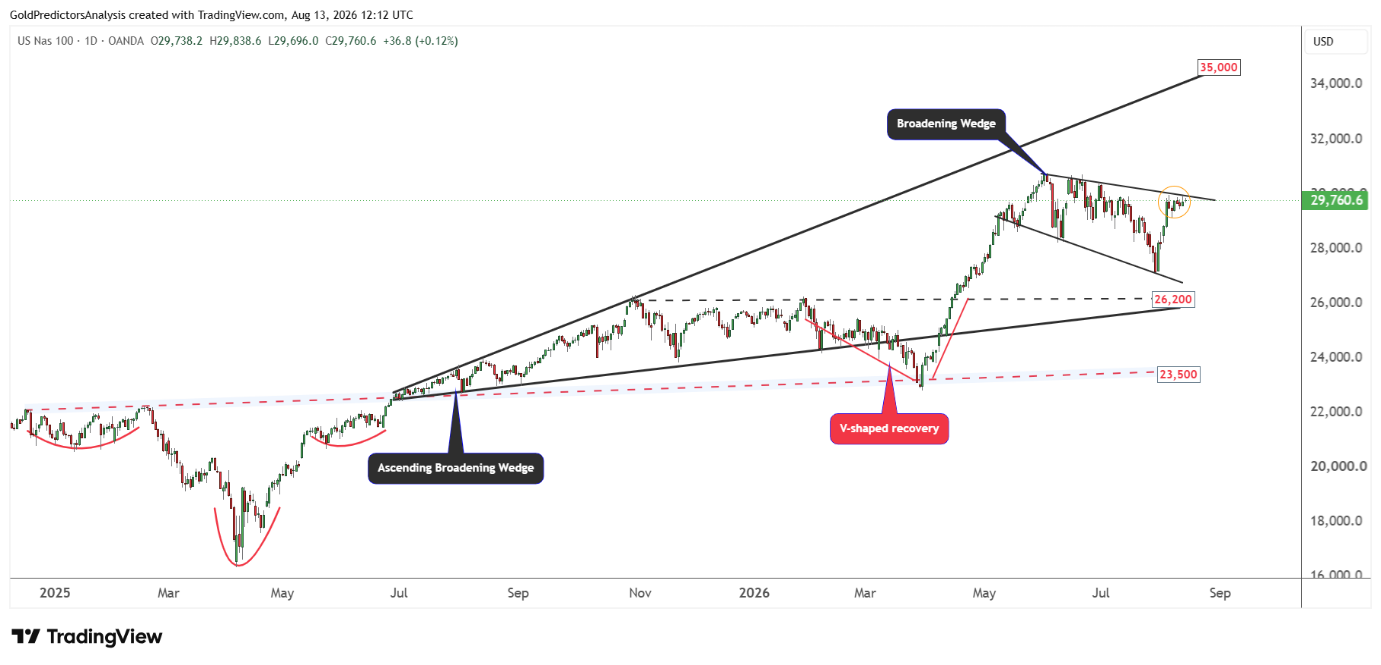
A break above 30,000 will likely signal strong surge in Nasdaq towards 35,000. This target is defined by the resistance of the broadening wedge pattern. The daily chart also shows the emergence of an inverted head and shoulders pattern from 2024 to 2025. The chart also highlights the ascending broadening wedge pattern and the V-shaped recovery within the wedge. This formation supports strong bullish momentum in Nasdaq 100.
Final Thoughts
The Nasdaq 100 outlook remains bullish despite some risks. The softer CPI has reduced immediate threat of another rate hike in September. However, it has not removed the inflation problem. The GDP deflator and the price index for gross domestic purchases remain firm. These broader measures may keep the Federal Reserve cautious and Treasury yields elevated. The higher yields could put pressure on expensive technology stocks.
Strong AI earnings and continued infrastructure spending support the index. But the negative reactions to some strong results show that investors expect near-perfect performance. The technical structure remains positive above 27,000. A confirmed break above 30,600 could open the way towards 35,000. But failure to break this resistance could trigger correction. The strong earnings announcements and easing inflation concerns may keep the index strong in the short term towards 35,000.