
Nasdaq Record Run Gets Help From Payrolls, Yields and Oil
The Nasdaq Composite Index pushed to a record high Friday after the jobs report gave stock buyers what they needed. Payroll growth missed badly, the prior two months were revised lower and unemployment ticked up. That took more October hike risk out of the market, pulled Treasury yields lower and gave technology another reason to take offers.
At 16:06 GMT, the Nasdaq Composite Index is trading at 27,182.09, up 310.50 points or +1.16%.
This was broader than a megacap bounce. Semiconductor stocks led, consumer discretionary joined in and 10 of the 11 S&P 500 sectors were higher. Lower oil also took some inflation pressure out of the tape. The rate problem didn’t disappear, but Friday gave buyers room to work with it.

Daily Nasdaq Composite Index (IXIC) Technical Analysis
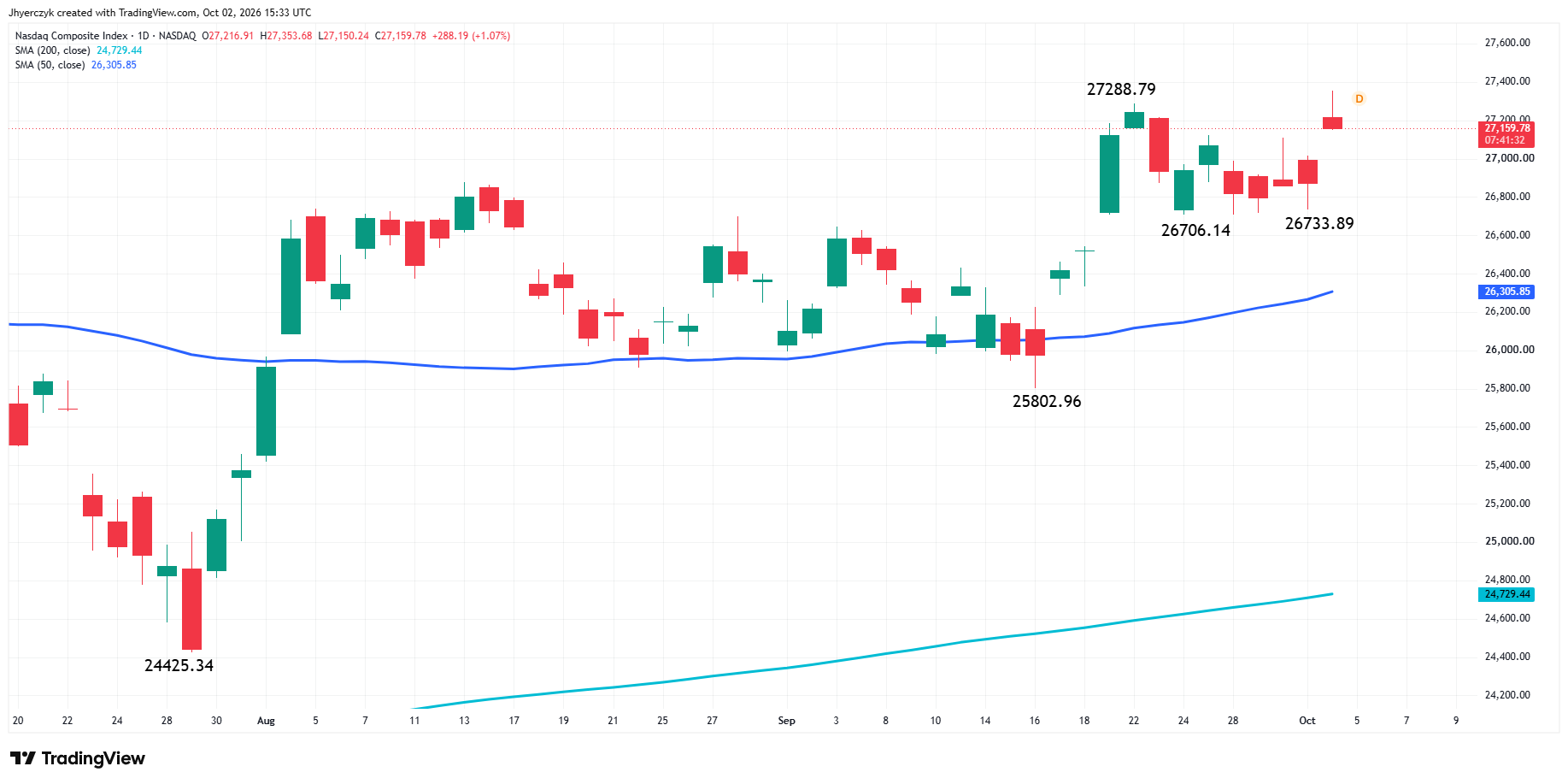
The Nasdaq Composite Index is trading higher as we approach the mid-session on Friday. The main trend is up according to the daily swing chart. It was reaffirmed earlier today when buyers took out the previous record high at 27,288.79. The main bottom is 25,802.96. A trade through this level will change the main trend to down.
The minor trend is also up. A trade through 26,733.89 will change the minor trend to down. Taking out the next minor bottom at 26,706.14 will reaffirm the change in the minor trend and could lead to a shift in momentum.
The index is also being supported by the 50-day moving average at 26,305.85.
Payrolls Broke the Near-Term Hike Case
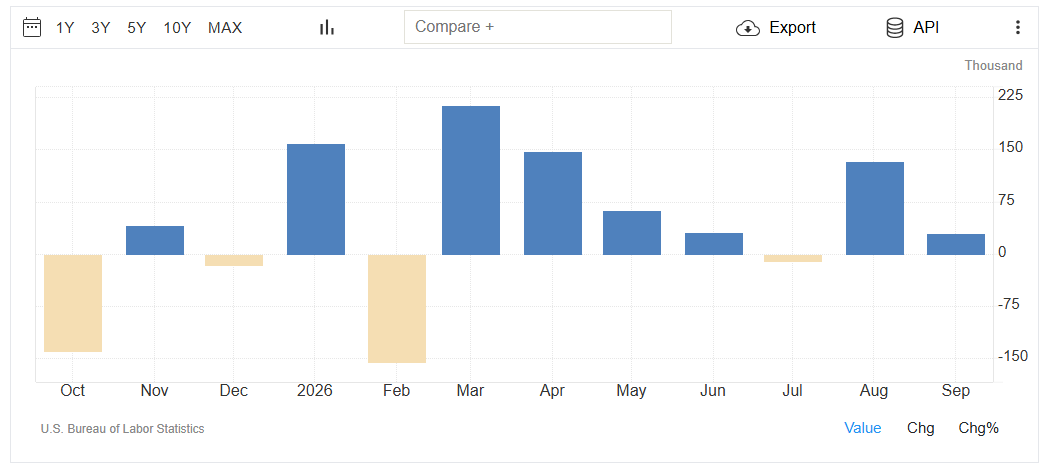
September Non-Farm Payrolls rose by 29,000, well under the 90,000 estimate. The report also cut the prior two months sharply. Traders had been trying to figure out whether the labor market was firm enough to keep the Fed moving after September’s rate increase. Friday’s number made that a much harder argument to carry into October.
The market was already leaning toward a pause after softer inflation data and comments from Fed officials urging patience. Payrolls reinforced it. Traders put the chance of a quarter-point October hike near 20%, down from 26% before the release.
That’s the part equities bought. Friday’s reaction says traders saw enough softness to ease Fed pressure without seeing an economy coming apart, at least not yet.
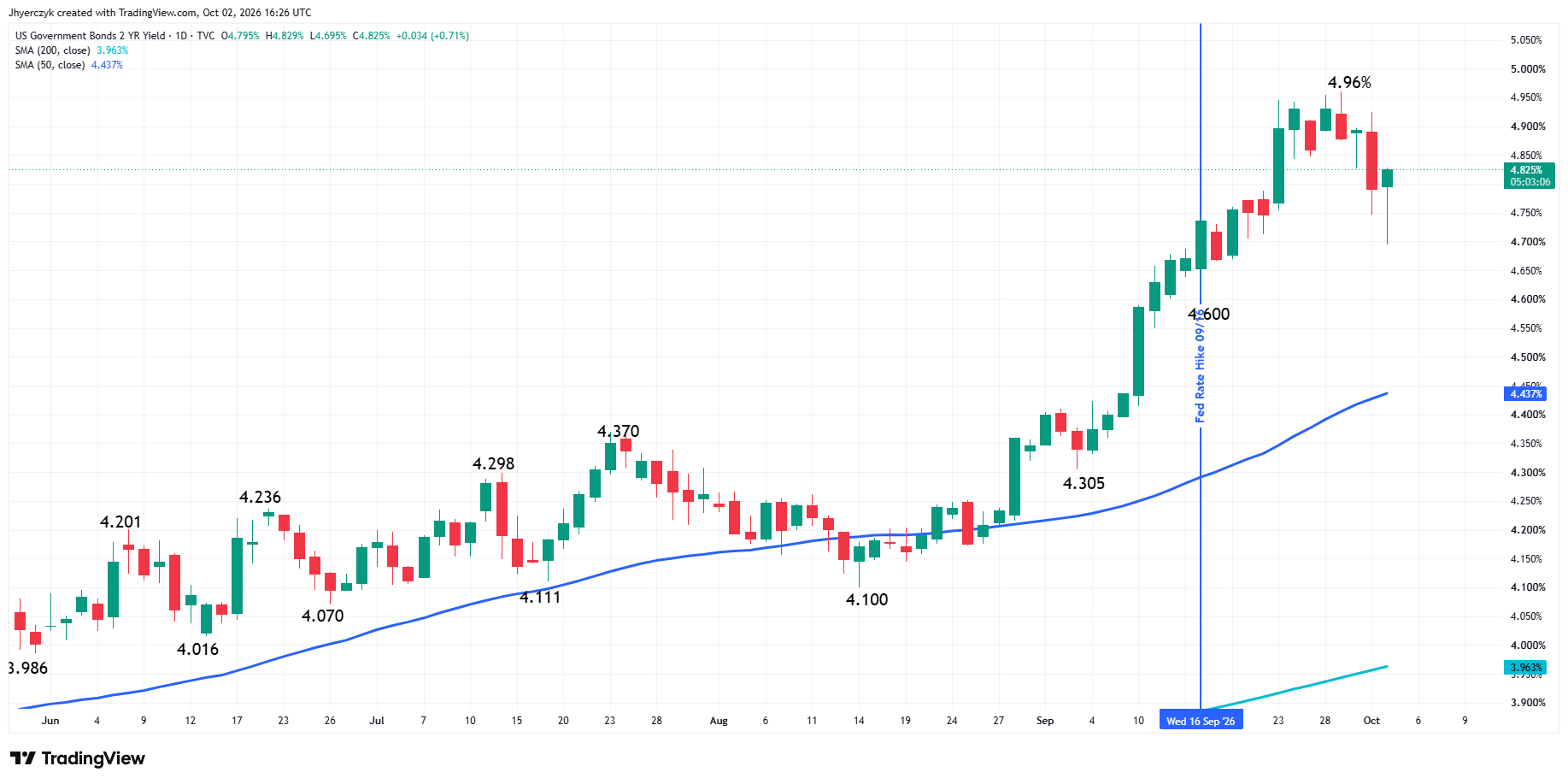
The two-year Treasury yield fell for a second session after the report. That’s the cleaner rate signal for the October meeting. The long end had already started to come off Thursday’s highs. Buyers finally had an economic report that didn’t give bond sellers another reason to press. Factory orders and Dallas Fed President Lorie Logan are still on Friday’s calendar.
Semiconductors Took the Lead Again
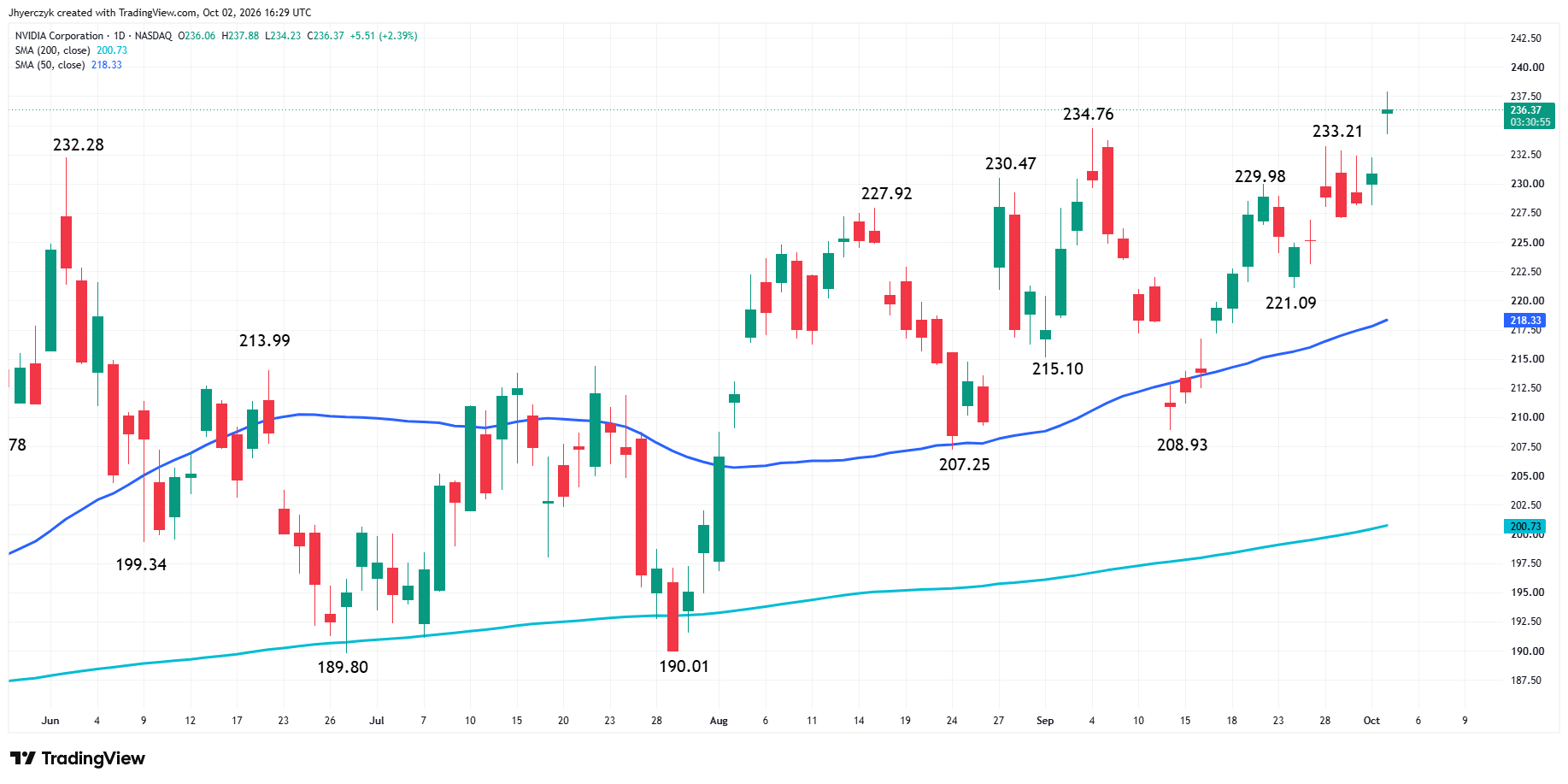
The Philadelphia Semiconductor Index rose more than 3%. Nvidia reached another intraday record high. SpaceX, Tesla and Oracle were also higher. That put the leadership squarely back in the AI, data-center and growth names that have carried the Nasdaq through the rate volatility.
This wasn’t one stock catching a bid after earnings. Buyers came back into the group after Micron’s post-report selling and spread the money through the larger technology names. Friday’s payrolls number gave them a lower-rate story to trade, but the underlying AI spending story is still what keeps them interested.
Fear came out of the market too, with volatility down to a one-week low near 15.67. Advancers outnumbered decliners by better than 3-to-1 on the NYSE and 2.5-to-1 on the Nasdaq. That’s better participation than the narrow technology rallies that kept showing up in September.
Bitcoin rose more than 3%, with Coinbase and Strategy higher too. Risk appetite extended beyond stocks once yields started moving lower.
Daily Philadelphia Semiconductor Index (SOX) Technical Analysis
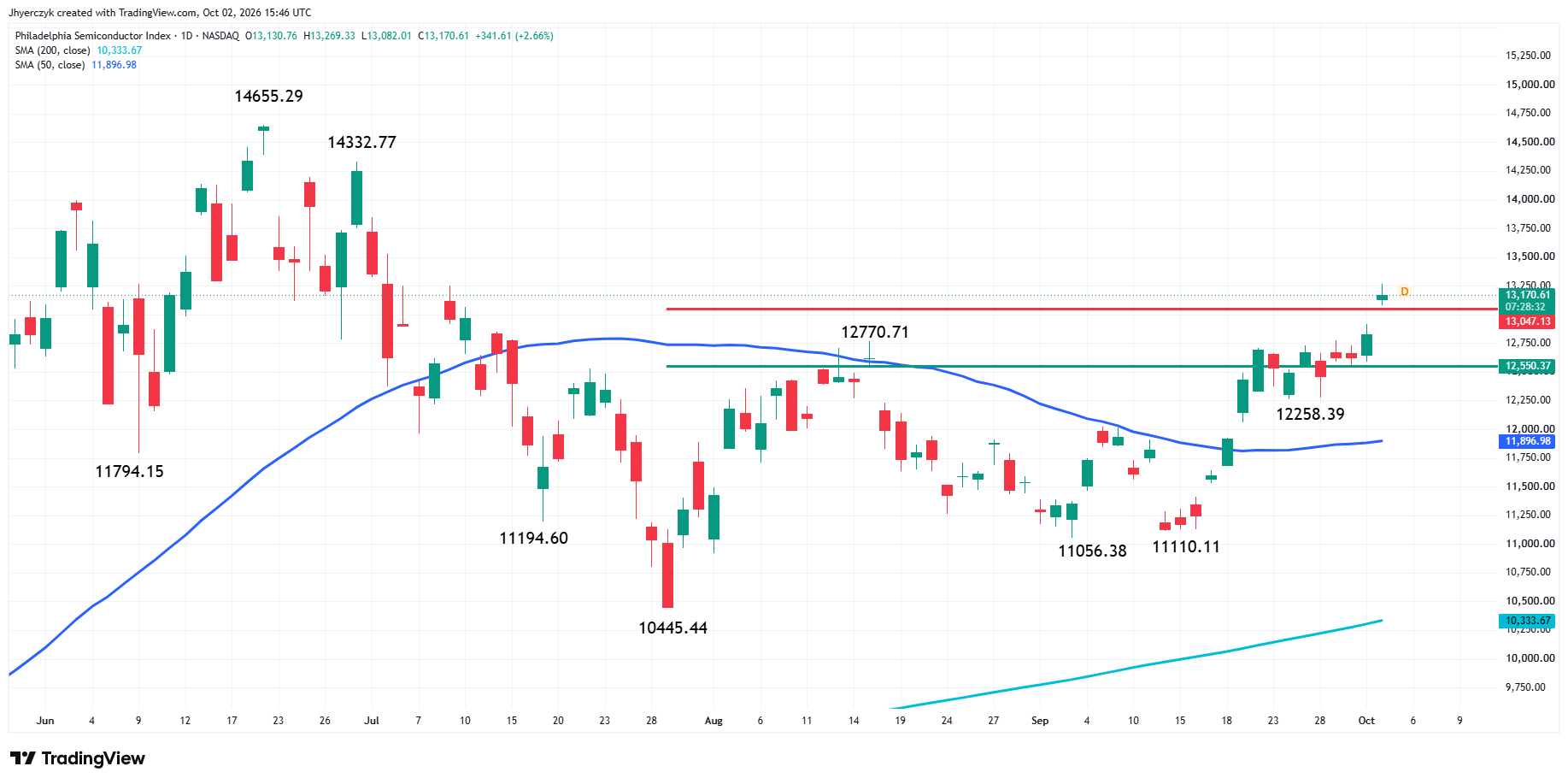
The Philadelphia Semiconductor Index is trading higher on Friday after gapping above resistance on the opening.
The main trend is up according to the daily swing chart. The nearest targets are a pair of main tops at 14,332.77 and 14,655.29. The main trend changes to down on a trade through 12,258.39.
In addition to the swing chart, crossing to the strong side of a long-term retracement zone at 13,047.13 to 12,550.37 is also a bullish indicator. This area is new support. Additional price and trend support is being provided by the 50-day moving average at 11,896.98.
Oil Gave the Inflation Trade a Break
Brent crude slipped under $100 a barrel after reports that European governments discussed additional releases of diesel and crude reserves. November WTI crude oil futures also moved lower.
A reserve release won’t fix refinery damage, restore product flows or settle the Middle East conflict. Traders took it anyway. Oil had become part of the inflation and bond-selling trade. Any near-term supply response helps.
That was enough for stocks Friday. Lower oil gives the bond market one less reason to push yields back toward Thursday’s highs. It also gives rate-sensitive groups a chance to catch up with technology.
What to Watch
Factory orders and Logan’s comments are still ahead Friday. The jobs report already changed the immediate rate conversation, though. Buyers have the October pause case. The next question is whether falling yields can hold once the payrolls reaction wears off.
The bias is to the upside. The Nasdaq Composite Index set a new record high at 27,353.68 earlier today and the main and minor trends are both up on the daily swing chart. Approaching the mid-session, the index is trading back under that high. The higher minor bottoms at 26,733.89 and 26,706.14 sit underneath.
The bias is to the upside in the Philadelphia Semiconductor Index too. Three independent trend indicators are pointed up: the swing chart, the long-term retracement zone and the 50-day moving average. The index gapped above resistance at the opening. The 13,047.13 to 12,550.37 zone is now support underneath, with the main tops at 14,332.77 and 14,655.29 the nearest targets.
More Information in our Economic Calendar.