Treasury Gave the Opening Bid but Fed Minutes Pulled Stocks Off the Highs
The stock market rallied Wednesday morning after Treasury announced a bigger buyback program for longer-dated debt. Long yields dropped. Rate-sensitive names caught a bid. The indexes were all positive heading into the afternoon.
The FOMC minutes changed the tone. The minutes showed officials are still prepared to raise rates if inflation does not cool. Hammack, Logan and Kashkari voted for a hike and the rest of the committee did not sound comfortable holding. Stocks came off their highs on the read.
By 18:11 GMT, all three major indexes were still positive but well off session highs.
Daily September E-mini S&P 500 Index Futures Technical Analysis
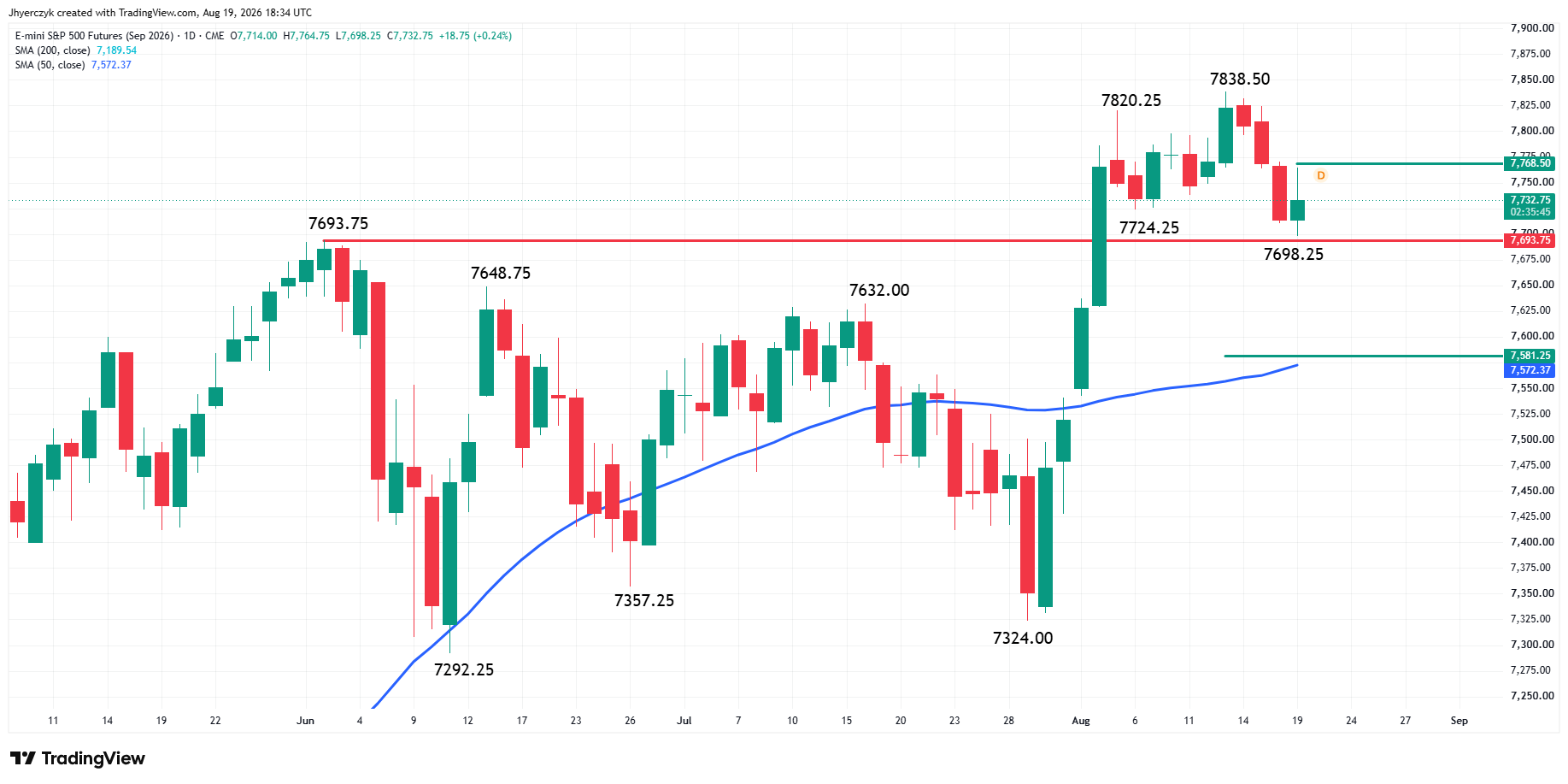
September E-mini S&P 500 Index futures are edging higher shortly after the release of the latest FOMC minutes.
The main trend is up according to the daily swing chart. However, the minor trend is down. This is helping to cap the upside momentum.
Today’s early session weakness took the index to 7698.25, which was slightly above the previous all-time high at 7693.75. The technical bounce that followed was not a surprise since old tops tend to become new bottoms.
Crossing to the weak side of 7693.75 will indicate the selling pressure is getting stronger. This could lead to a steep break in the near term since the nearest support is a long-term 50% level at 7581.25 and the 50-day moving average at 7572.42.
The new short-term range is 7838.50 to 7698.25. If there is a late session rally on Wednesday, we could see a surge into its pivot at 7768.50. Overtaking this pivot will be a sign of strength, with the record high at 7838.50 the next major upside target.
Dow Jones Price Forecast
Every new Dow Jones analysis as it publishes, today's technical signal and key levels, live price — on one page.
See all Dow Jones forecastsTreasury Hit the Part of the Curve That Was Doing the Damage
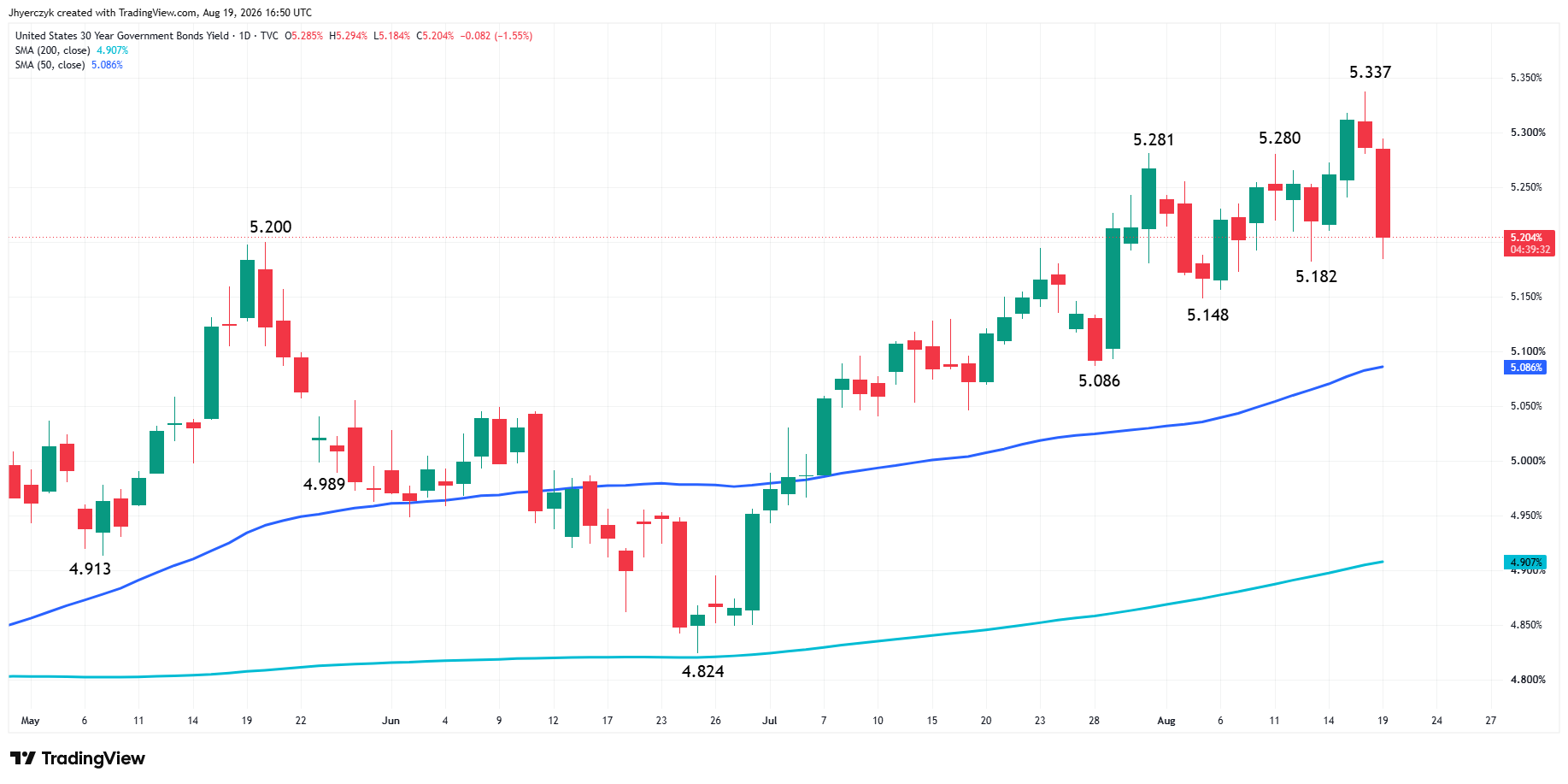
Treasury will raise the maximum size of its buyback operations from $2 billion to at least $4 billion, targeting the 10- to 30-year sectors including 20-year debt. The program starts September 9 and runs through November 4. The 30-year yield fell more than 6 basis points Wednesday to 5.216% after reaching a 19-year high above 5.33% the day before. The 10-year lost 3 basis points to 4.676%.
The move brought buyers into stocks that benefit when borrowing costs ease. The rotation into value and rate-sensitive names showed traders were willing to own the economy and the earnings cycle when the long end cooperated. The minutes reminded them that a lower long-bond yield does not mean the Fed is finished.
The Fed Has Not Dropped the Hike Threat
The FOMC voted 9-3 at its July 28-29 meeting to keep rates at 3.50% to 3.75%. Hammack, Logan and Kashkari voted for a quarter-point increase. The minutes showed many officials believed further tightening could be necessary. Some questioned whether financial conditions were restrictive enough to bring inflation back to 2%.
The market had already cut September hike odds after softer data. Nonfarm payrolls fell by 23,000 in July. The unemployment rate slipped to 4.1% but the drop was tied mainly to a smaller labor force. June PCE prices declined 0.1% though the annual rate was still 3.7%. CPI was contained. PPI was flat. Retail sales were weak.
The numbers have slowed. Inflation remains above target. The minutes showed the committee is still focused on the second part of that equation and stocks came off their highs on the read.
Moderna More Than Doubled on Cancer Vaccine Data
Moderna surged more than 140% Wednesday after its experimental skin cancer vaccine with Merck showed success in a late-stage trial. Merck gained more than 11%, giving the Dow large-cap support when the broader market pulled back on the minutes. The trial is still continuing and the companies have not said when they will apply for U.S. approval.
Bitcoin Surges on Yield Drop
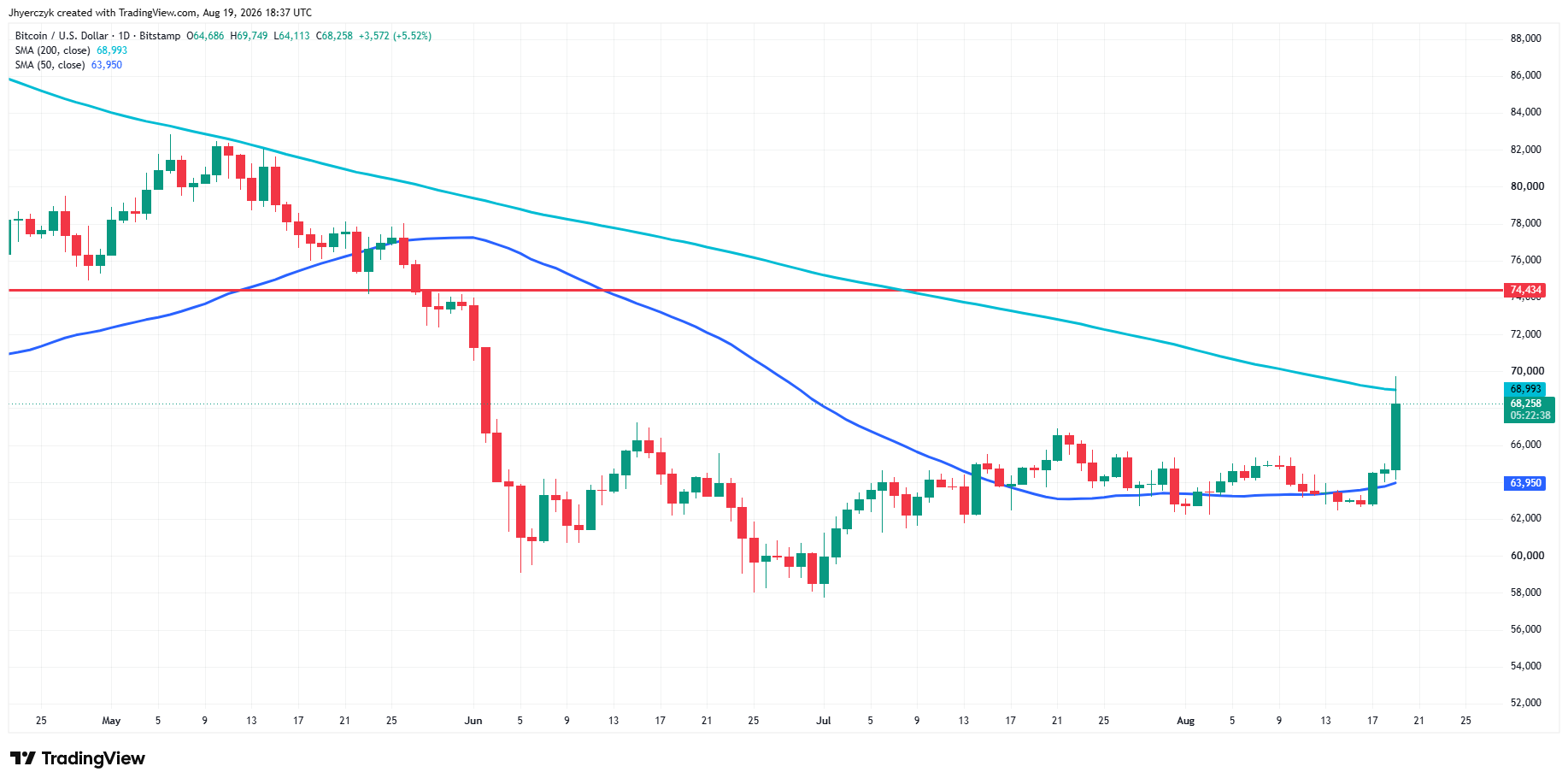
Lowe’s gained more than 2% on the Treasury yield drop. Home Depot rose more than 1%. McDonald’s was nearly 1% higher. Marvell jumped 8% after a Google deal on tensor processing units. Broadcom and AMD fell about 4% after OpenAI’s second-quarter revenue growth disappointed. Bitcoin topped $68,600. December gold futures reached $4,557.60, their highest since June 2. Kinross Gold, Agnico Eagle and Newmont moved higher on lower yields.
What to Watch
Treasury gave stocks relief on the long end. The Fed minutes gave traders a reason not to chase it. The 30-year yield is lower but the committee is still talking about another rate increase. That leaves the market positive for the session but off the highs, with the Treasury bid competing against a Fed that has not closed the door.
The S&P bounced off the prior all-time high, which held as new support on the first test. The minor trend is still down and the pivot overhead is the level that tells traders whether Wednesday’s late session can build or fade into the close. The record high is above that. The market needs the long bond to stay cooperative and the Fed message to soften before buyers commit to taking out the top.
More Information in our Economic Calendar.