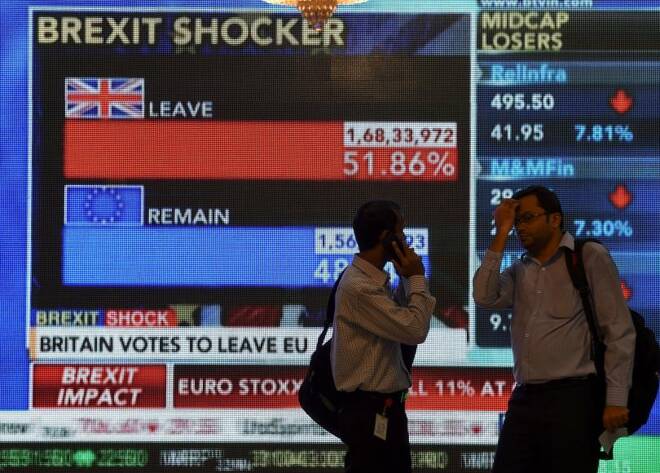
The UK pound has managed to halt its slide after the electorate voted to leave the European Union (EU) in the referendum last week, with the GBP/USD rate now at $1.34 this morning GMT, a rise from the nadir of $1.31 in the aftermath of the ‘Brexit’ decision, and $1.32 at the beginning of yesterday.
Against the euro, the pound has also emerged from tumbling down to below 1.20 euros, and now the GBP/EUR rate has slowly climbed to 1.21 euros.
Despite the relative progress that sterling has made , few predict that this will be sustained, as the uncertainly surrounding from the exit from the EU is likely to strangle the pound for some time to come.
Societe Generale in their analysis said that while sterling had a slightly better day yesterday, it’s hard to imagine the rally going much further, so far there has been significant volatility with the pound.
The currency has also been falling along with mounting expectations of a Bank of England rate cut., in this light the Societe Generale said, sterling’s post-referendum collapse has not been a disorderly one.
Outgoing UK Prime Minister David Cameron at the EU summit in Brussels, outlined his vision for the UK’s new relationship with the rest of the EU, saying that Britain would not turn is back on Europe, and called for close economic cooperation between the two parties.
He also said that the ‘Remain’ camp had lost the referendum, due to fears over immigration, Cameron also thought that it would be challenging to marry access to the single market and continuing to accept large numbers of EU migrants into the country.
Germany’s chancellor Angela Merkel replied by saying that the UK will not be able to ‘cherry pick’ aspects of the EU, and that participating in the single market will mean freedom of movement will have to be part of any trade deal.
Household Confidence Falters in France
Official figures in France have revealed that households confidence in their economy has fallen in June, whereas in the previous month the confidence index was at its highest point since October 2007, before the financial crash had taken its grip.
Opinions over the personal finance situations over the past year have improved in June , with a two point index increase year on year, after four months of stability, and there is a stable opinion of how personal finances will fare over the next year.
In contrast, opinion over standards of living in France has turned more pessimistic in June, compared to a surge in positivity in May, and as labour reforms in France continue to provoke strong protests, fears over unemployment were virtually unchanged this month, this index stands at its lowest level since June 2008, below its long-term average.

France recorded 0.6% of GDP growth in the first quarter of this year, a leap of 0.2% from the previous quarter, while inflation has been in negative figures between February and April, falling to a latest figure of minus 0.2%.