
USD/JPY took the spotlight in early trading on Monday, February 2. The Bank of Japan’s Summary of Opinions fueled speculation about a near-term rate hike, influencing yen demand.
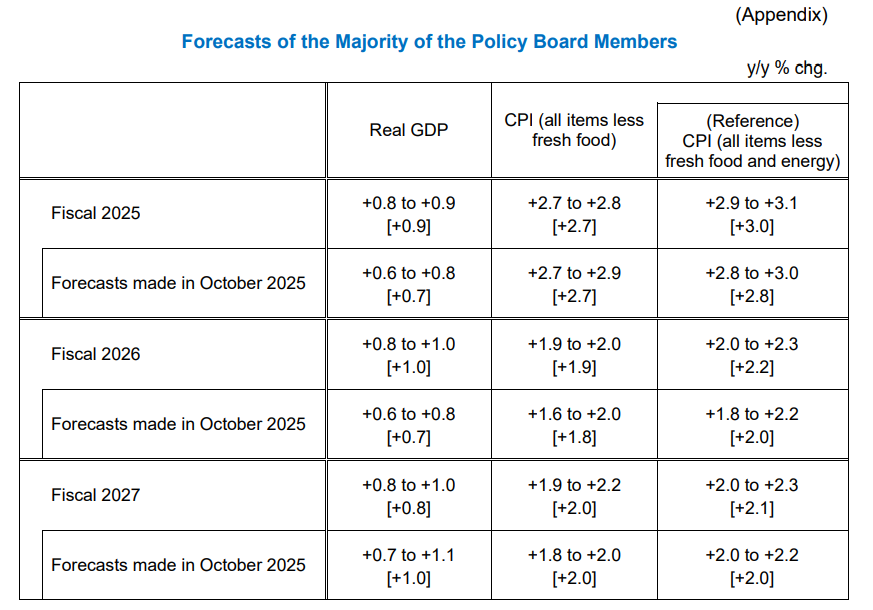
Last week, the Bank of Japan’s upward revisions to quarterly GDP and inflation forecasts, and a hawkish Governor Kazuo Ueda, sent the USD/JPY pair to 152.092. It was the pair’s lowest level since October.
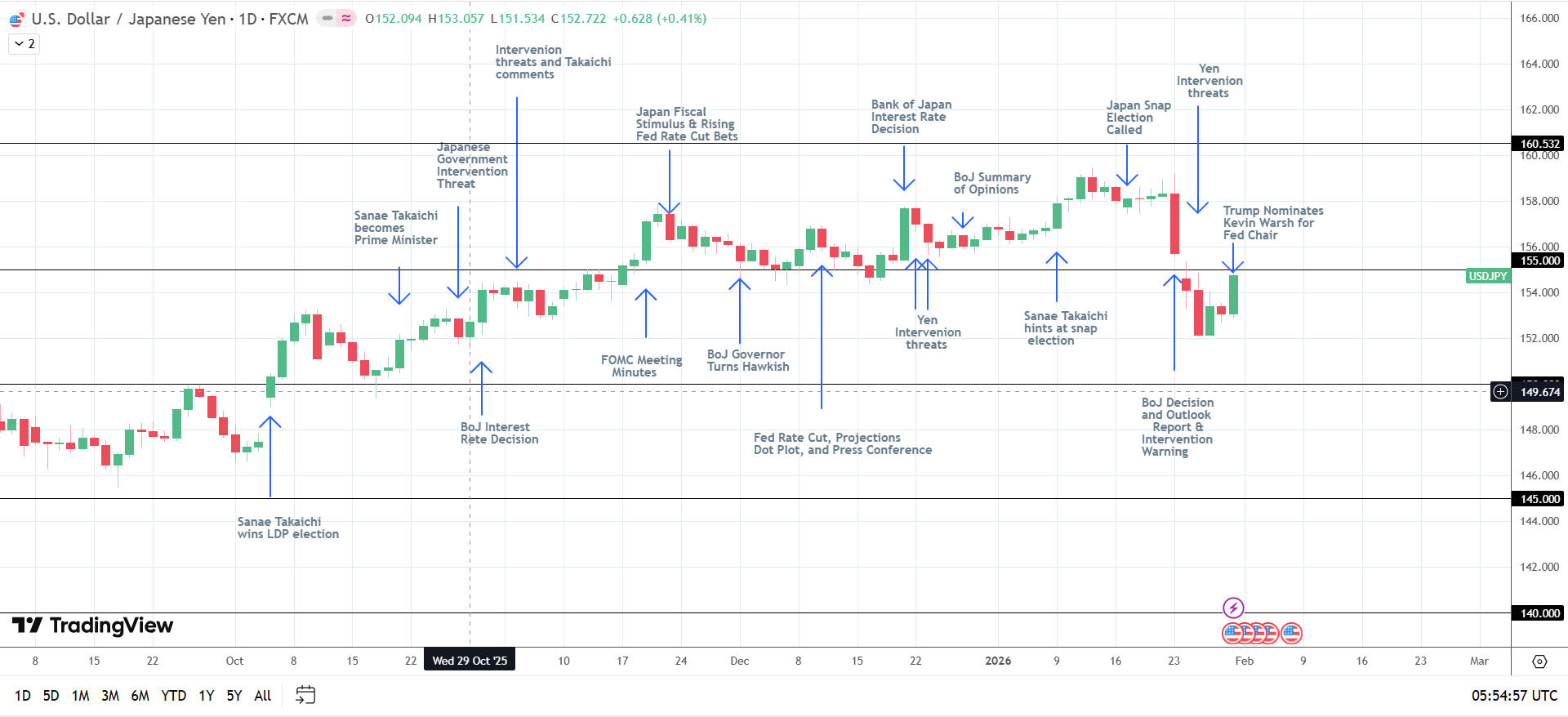
The BoJ’s policy stance and expectations of multiple Fed rate cuts in 2026 continue to support a bearish medium-term outlook for USD/JPY.
Below, I’ll discuss the macro backdrop, near-term price catalysts, and technical levels traders should closely watch.

Bank of Japan Summary of Opinions Turns More Hawkish
On February 2, the BoJ’s Summary of Opinions from the January 2026 meeting indicated a more hawkish stance among policymakers, aligning with expectations of an H1 2026 rate hike.
There was a growing sense that the need for another interest hike was approaching. Policymakers cited concerns about inflationary pressures and yen depreciation. However, there were some calls to continue assessing the effects of current inflation levels on the economy and prices.
USD/JPY reacted to the Summary of Opinions, initially climbing to a high of 155.240 before falling to a low of 154.821. The pullback reflected rising bets on a rate hike before the summer.
USD/JPY Price Forecast
Every new USD/JPY analysis as it publishes, today's technical signal and key levels, live price — on one page.
See all USD/JPY forecasts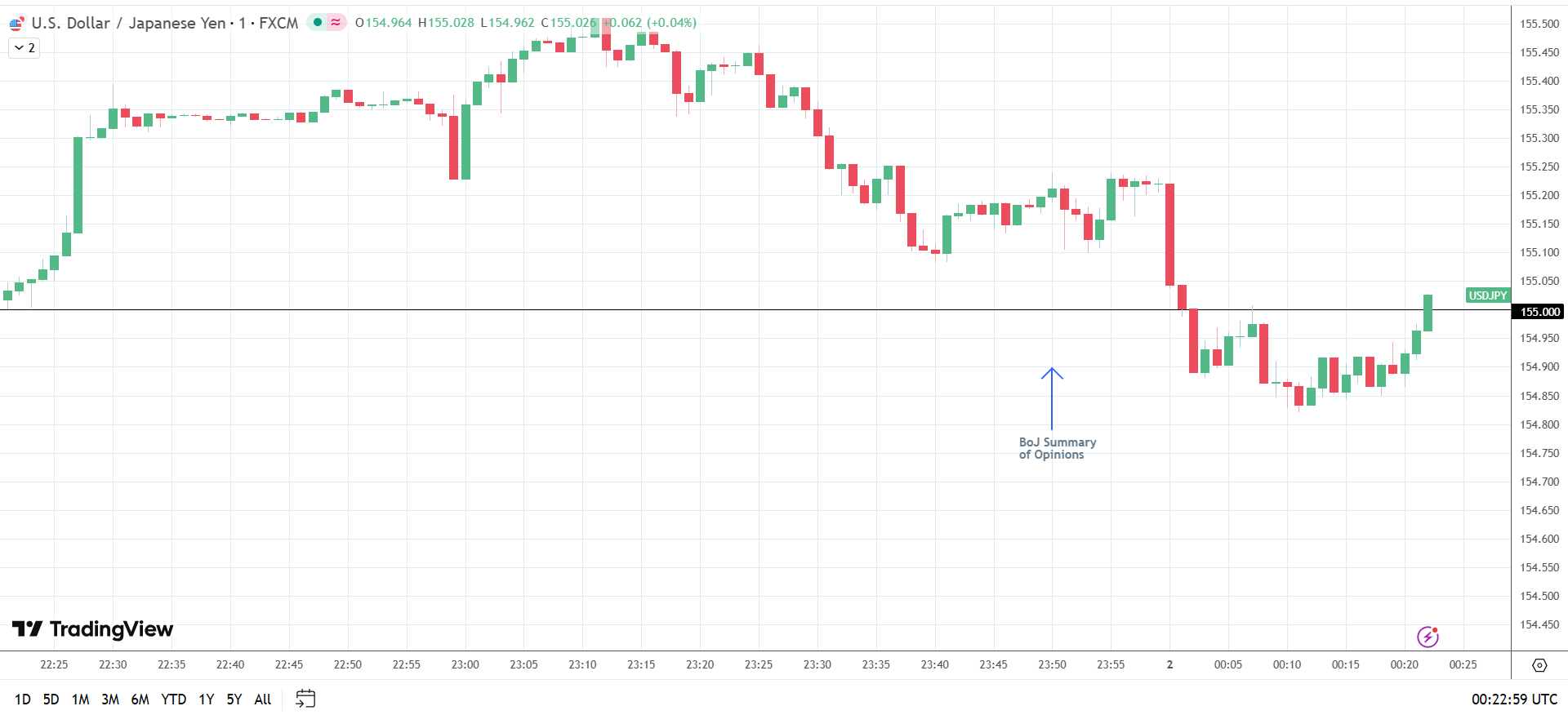
Policymakers Signal Focus on Yen Weakness and Incoming Data
While the opinions were skewed toward the hawks, not all policymakers were aligned.
Incoming Japanese economic indicators will be crucial to the short- to medium-term outlook for USD/JPY, given the BoJ’s quarterly outlook report. Bank of Japan Governor Kazuo Ueda reaffirmed the Bank’s commitment to continue raising interest rates if the economy and prices aligned with its projections.
Last week, softer Tokyo inflation and weak retail sales figures cooled bets on an April BoJ rate hike, sending USD/JPY toward 155. The price action underscored the USD/JPY pair’s sensitivity to incoming economic data and shifts in central banks’ policy stances.
US ISM Manufacturing and the Fed in Focus
Later on Monday, US economic indicators will fuel speculation about an H1 2026 Fed rate cut and demand for the US dollar.
Economists expect the ISM Manufacturing PMI to increase from 47.9 in December to 48.3 in January. A less marked contraction across the manufacturing sector would ease concerns about a sharp slowdown in US GDP growth, bolstering the US Dollar. However, traders should consider price and employment trends, considering the Fed’s dual mandate.
Softer prices and falling employment would likely overshadow a pickup in sector activity, and raise expectations of an H1 2026 Fed rate cut. A more dovish Fed policy stance would weaken the US dollar and send USD/JPY lower. Importantly, a more dovish Fed would support the bearish short- to medium-term outlook for USD/JPY.
Beyond the economic data, traders should closely monitor Fed speeches for insights into inflation, the economy, and the timeline for rate cuts.
According to the CME FedWatch Tool, the probability of a March Fed rate cut fell from 15.4% on January 23 to 13.4% on January 30, following a larger-than-expected rise in US producer prices. Meanwhile, the chances of a June cut rose from 60.7% to 61.8% last week. The modest increase in bets on a June cut underscored optimism that inflation will cool, enabling the Fed to lower rates.
Importantly, an H1 2026 Fed cut would support expectations of multiple rate cuts in 2026. Multiple Fed rate cuts would coincide with the BoJ’s hawkish policy outlook, signaling narrower US-Japan rate differentials. Narrowing rate differentials, favoring the yen, would weigh on USD/JPY.
Technical Outlook: Key Levels to Watch
For USD/JPY price trends, traders should assess technicals and monitor economic data, central bank chatter, and geopolitical headlines.
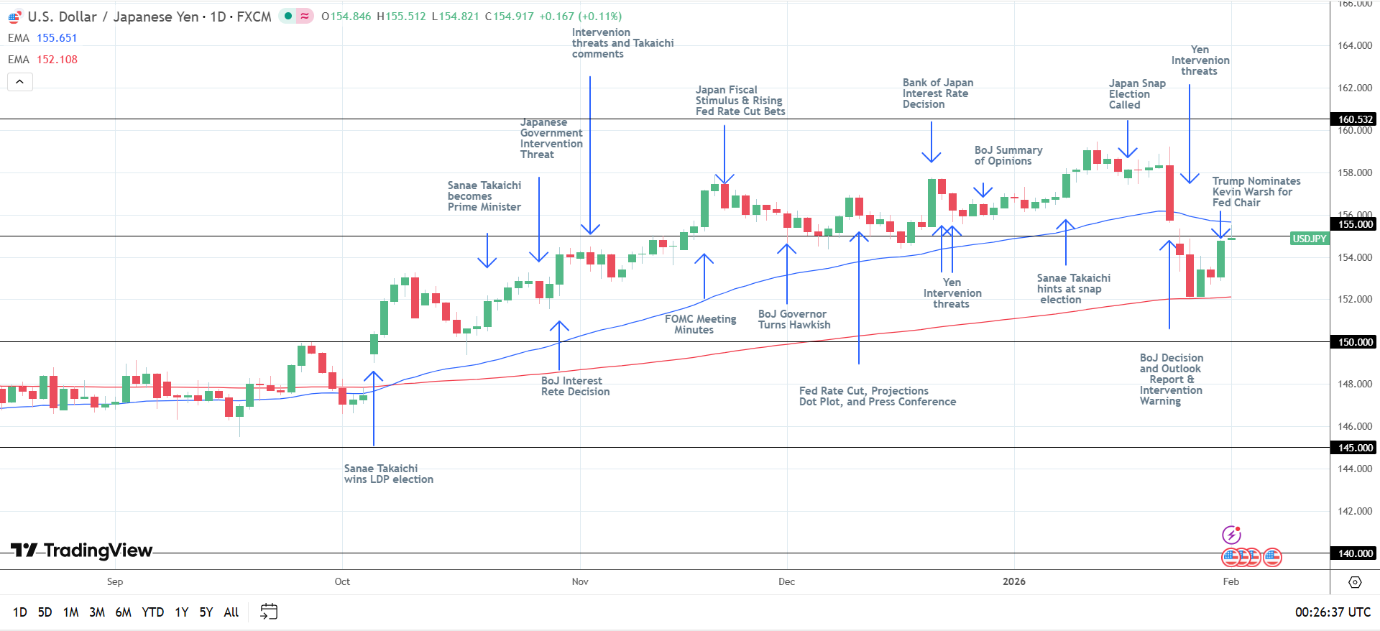
On the daily chart, USD/JPY trades below its 50-day Exponential Moving Average (EMA), but above the 200-day EMA. The EMA positions signaled a near-term bearish trend reversal, aligning with the negative price outlook for USD/JPY. Notably, positive yen fundamentals have aligned with the near-term technicals.
A break below the 200-day EMA would bring the 150 support level into play. If breached, October’s low of 146.585 would be the next key support level.
Importantly, a sustained fall through the EMAs would reaffirm the bearish trend reversal. These scenarios would reinforce the negative short- to medium-term price outlook.
Positioning and Risk Outlook
In my view, the BoJ’s Summary of Opinions, positive projections, a hawkish BoJ rate path, and the bets on Fed rate cuts support a negative price outlook. However, Japan’s upcoming election and incoming US economic data will be key, given the recent price action.
Furthermore, a higher BoJ neutral interest rate level (potentially 1.5%-2.5%) would suggest multiple BoJ rate hikes. Narrower-than-expected US-Japan interest rate differentials may trigger a yen carry unwind, as seen in mid-2024. An unwind of yen carry trades would likely push USD/JPY toward 140 over the longer term.
However, upside risks to the bearish outlook include:
- Dovish BoJ rhetoric and a lower neutral interest rate (potentially 1% – 1.25%).
- US economic data dampens expectations of an H1 2026 Fed cut.
These factors would send USD/JPY higher. However, threats of yen intervention are likely to cap the upside at around 155.
Read the full USD/JPY forecast, including chart setups and trade ideas.
Conclusion: Politics, the BoJ, and the Fed in the Spotlight
In summary, the USD/JPY trends will depend on Japan’s election outcome, Prime Minister Takaichi’s fiscal spending plans, the BoJ’s policy stance, the Fed’s rate path, and geopolitical factors.
A higher BoJ neutral rate (1.5%-2.5%) would signal a more hawkish BoJ rate path, strengthening the yen. Meanwhile, Prime Minister Takaichi’s snap election result will also be crucial for the near-term USD/JPY trends. Markets remain concerned over her fiscal spending plans. Additionally, dovish Fed rhetoric would also indicate narrower rate differentials, reaffirming the bearish medium-term outlook for USD/JPY.
A stronger yen and yen carry trade unwinds would likely send USD/JPY toward 140 over the longer 6-12 month time horizon.
For more in-depth analysis, review today’s USD/JPY trading setups in our latest reports and consult the economic calendar.