
Ether prices (ETHUSD) are facing two challenges. US inflation has risen again, keeping another interest-rate increase on the table. At the same time, investors have been taking money out of funds that hold ether. Both developments help explain the recent pressure on its price, even as Ethereum prepares to improve its network.
US consumer prices were 3.7% higher in September than a year earlier, compared with 3.4% in August. Higher gasoline prices accounted for much of the monthly increase. Inflation remains a concern for the Federal Reserve (Fed), which must decide whether higher interest rates are needed to bring prices under control.
Interest rates matter for ether prices because they affect where people put their money. When savings accounts and bonds offer higher returns, investors may become less willing to hold assets whose prices can rise or fall sharply. That can make it harder for cryptocurrencies to attract buyers.

BlackRock’s ETHA Accounts for 93% of Last Week’s Net Ether ETF Withdrawals
US spot ether exchange-traded funds (ETFs) offer a way to invest in ether without buying and storing the cryptocurrency directly. During the week ending 16 October, investors withdrew about $320 million more than they put into these funds. BlackRock’s ETHA fund accounted for around 93% of those net withdrawals, according to Farside Investors. It was the third consecutive week in which withdrawals exceeded new investment.
The amount was smaller than the previous week’s $542 million, but that distinction matters. Less money leaving is an improvement; it does not mean investors have started putting money back in overall.
These figures do not tell us why every investor sold. Some may be taking profits, while others may be reducing how much money they have in cryptocurrencies. The funds also represent only part of the ether market. Even so, continued withdrawals suggest that this source of demand remains weaker than it was during the strong buying seen in late September.
Ethereum Price Forecast
Every new Ethereum analysis as it publishes, today's technical signal and key levels, live price — on one page.
See all Ethereum forecastsA Network Upgrade Does Not Guarantee a Higher Price
Ethereum’s planned Glamsterdam upgrade offers a separate reason to follow the market. The changes are intended to help the network process transactions more efficiently and handle growing use. Developers are testing them before introducing them to the main network.
Those improvements matter, but a better network and a higher ether price are not the same thing. An upgrade can improve how Ethereum works without changing investors’ concerns about inflation or interest rates. It also does not guarantee that money will return to ether funds.
That leaves two questions for markets: whether the technology is improving, and whether investors are becoming more willing to buy ether.
“Ethereum’s upgrade could improve how the network works, but investors are also thinking about what happens to their money. Higher interest rates can make savings and bonds more attractive, while continued withdrawals from ether funds show that some buyers are stepping back. The upgrade matters, but so do inflation and demand. These are different parts of the story, and progress in one does not automatically solve the others,” – Dat Tong, Senior Financial Markets Strategist at Exness.
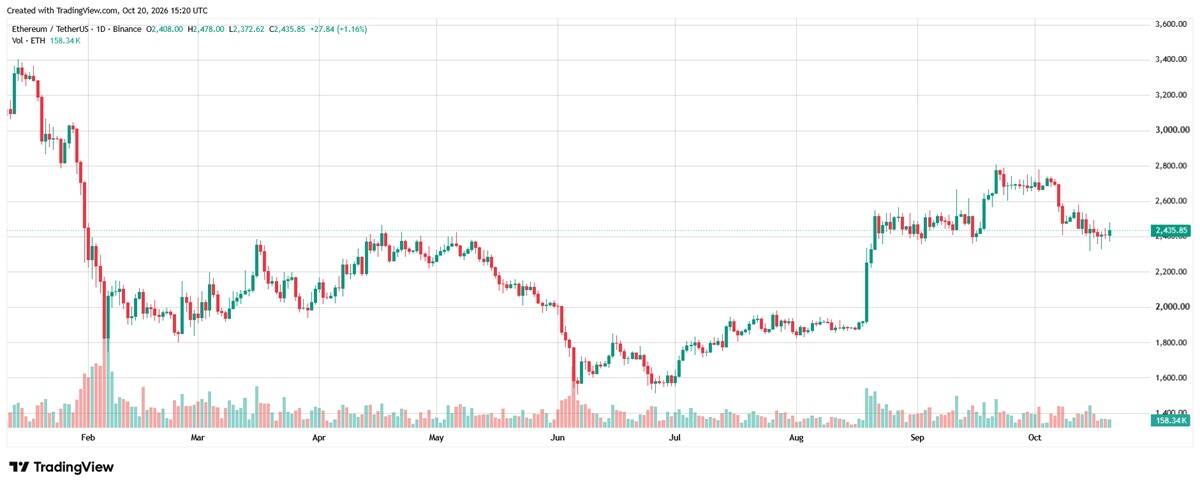
All eyes will now be on the Fed’s 28 October decision, the next ETF figures and progress on the upgrade. The rate decision will help clarify the cost of borrowing, while the fund figures will show whether investors are continuing to withdraw money or starting to return.