WTI Crude Oil

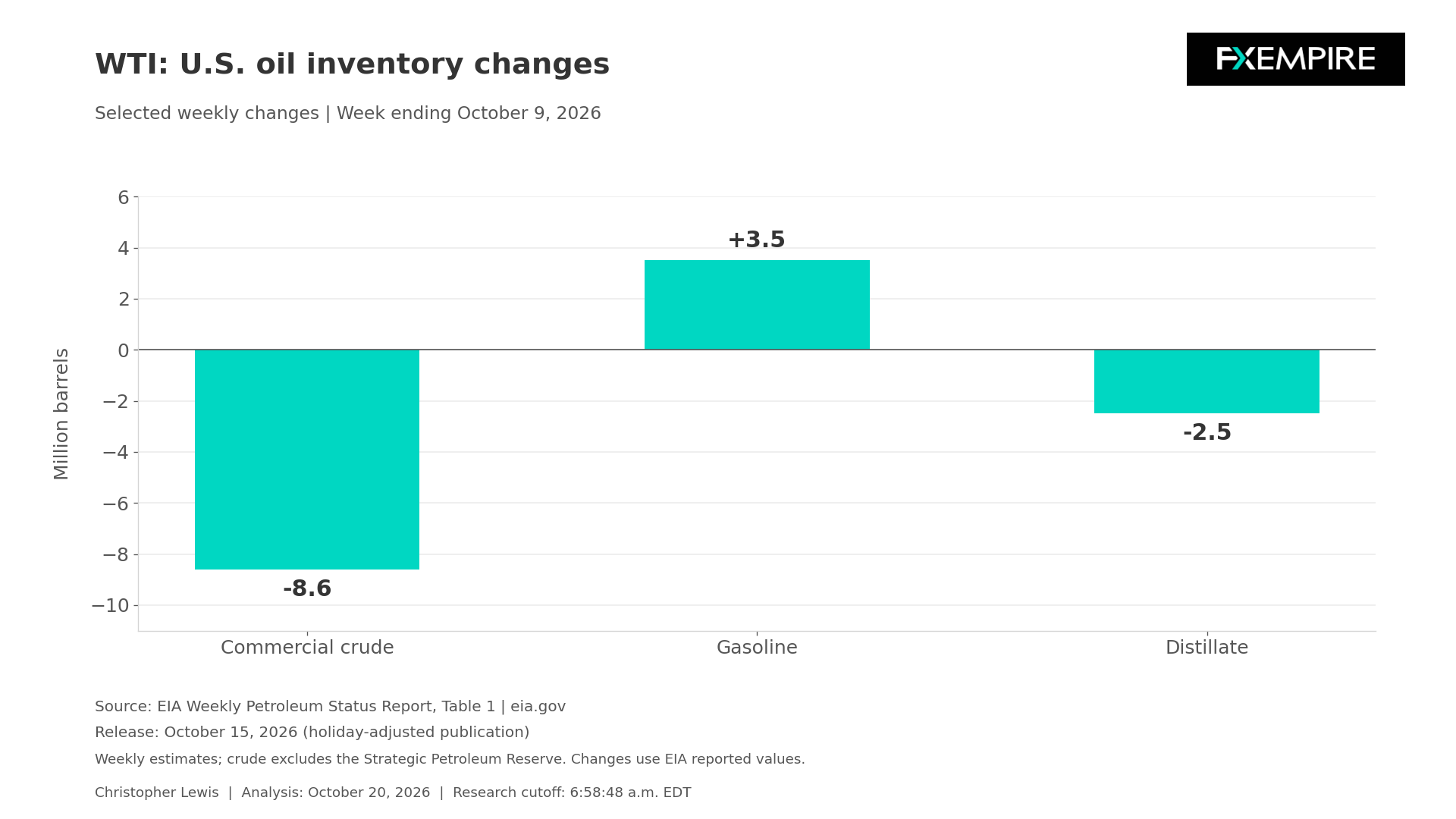
WTI crude oil’s fundamental backdrop remains supported by a substantial commercial crude draw, but the comparison of that draw matters. The latest EIA estimates, released on October 15 for the week ending October 9, put commercial crude inventories, excluding the Strategic Petroleum Reserve, at 415.6 million barrels, down by a reported 8.6 million barrels.

Crude Imports and Domestic Production
Lower incoming supply contributed to the tightening. Crude imports declined by 791,000 barrels per day to 6.049 million, while estimated domestic production fell by 300,000 barrels per day to 13.679 million. Refinery crude input increased by 135,000 barrels per day to 16.615 million. Crude exports also declined to 4.57 million barrels per day.
Altogether, these figures suggest that both supply availability and refinery demand influenced the stock reduction. An inventory draw caused partly by fewer imports does not establish that American end-user consumption has accelerated. Imports can vary with cargo timing, and a weekly production estimate is not a definitive measure of capacity loss for the longer term. Continued draws alongside sustained refinery intake would bring stronger evidence of tightening over a longer period of time than just a single week.
Gasoline Stocks
The product balances also resist a uniformly bullish reading. Gasoline stocks increased by 3.5 million barrels, while distillate inventories declined by 2.5 million. The Strategic Petroleum Reserve was unchanged at 283 million barrels. The no-reserve stock reduction in this particular week does not describe additional emergency supply entering the market.
IRGC Claims Ships Hit Mines
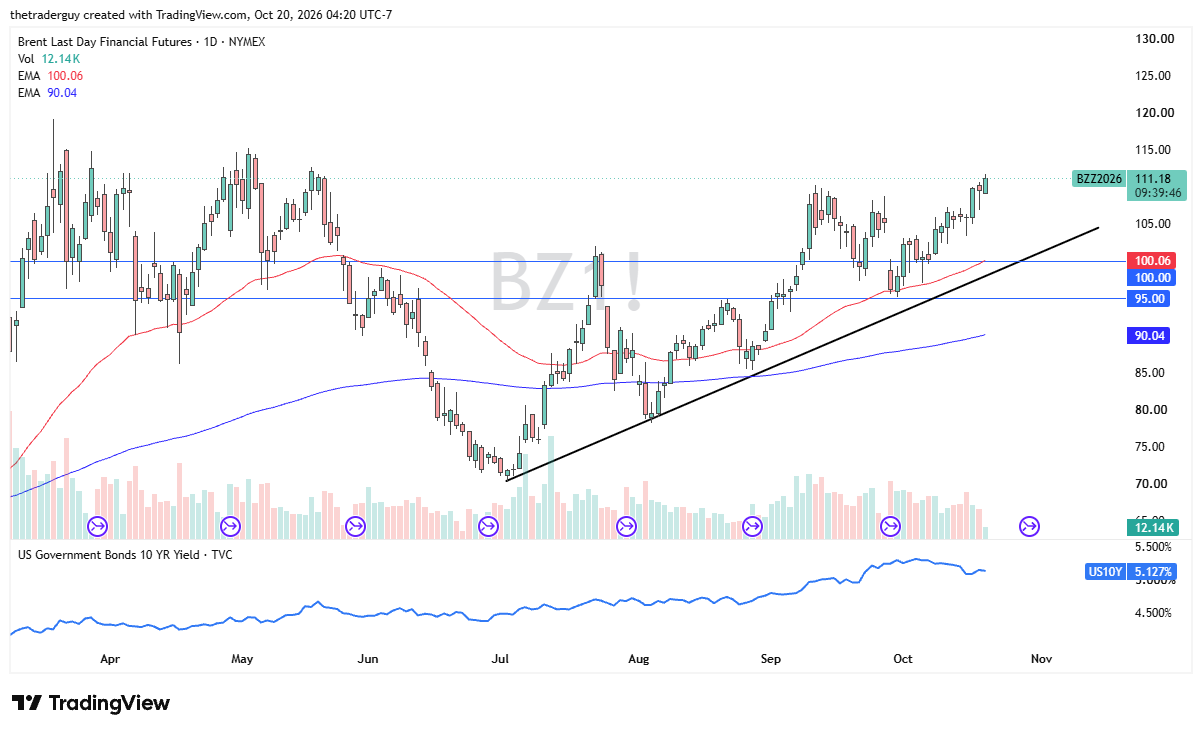
It is worth noting that the IRGC says two oil tankers struck mines in the Strait of Hormuz during the overnight session, which has added a little bit of bullish pressure. It now looks at this point that the light sweet crude oil market is possibly heading to fill the gap from the September 17 candlestick, which would put it looking to test the $102 level. At this point, it looks like short-term pullbacks continue to be buying opportunities.
Brent Oil Price Forecast
Every new Brent Oil analysis as it publishes, today's technical signal and key levels, live price — on one page.
See all Brent Oil forecastsBrent
The Brent market’s international balance combines revolving concerns with supply, but continuing stockpile gains in refining and transportation. The IEA’s October 14 Oil Market Report estimates September global supply at 102.3 million barrels per day, up 2.5 million from August. This is an estimate. It does not establish that October deliveries are proceeding without disruption, as it is a month old.
Refinery Numbers
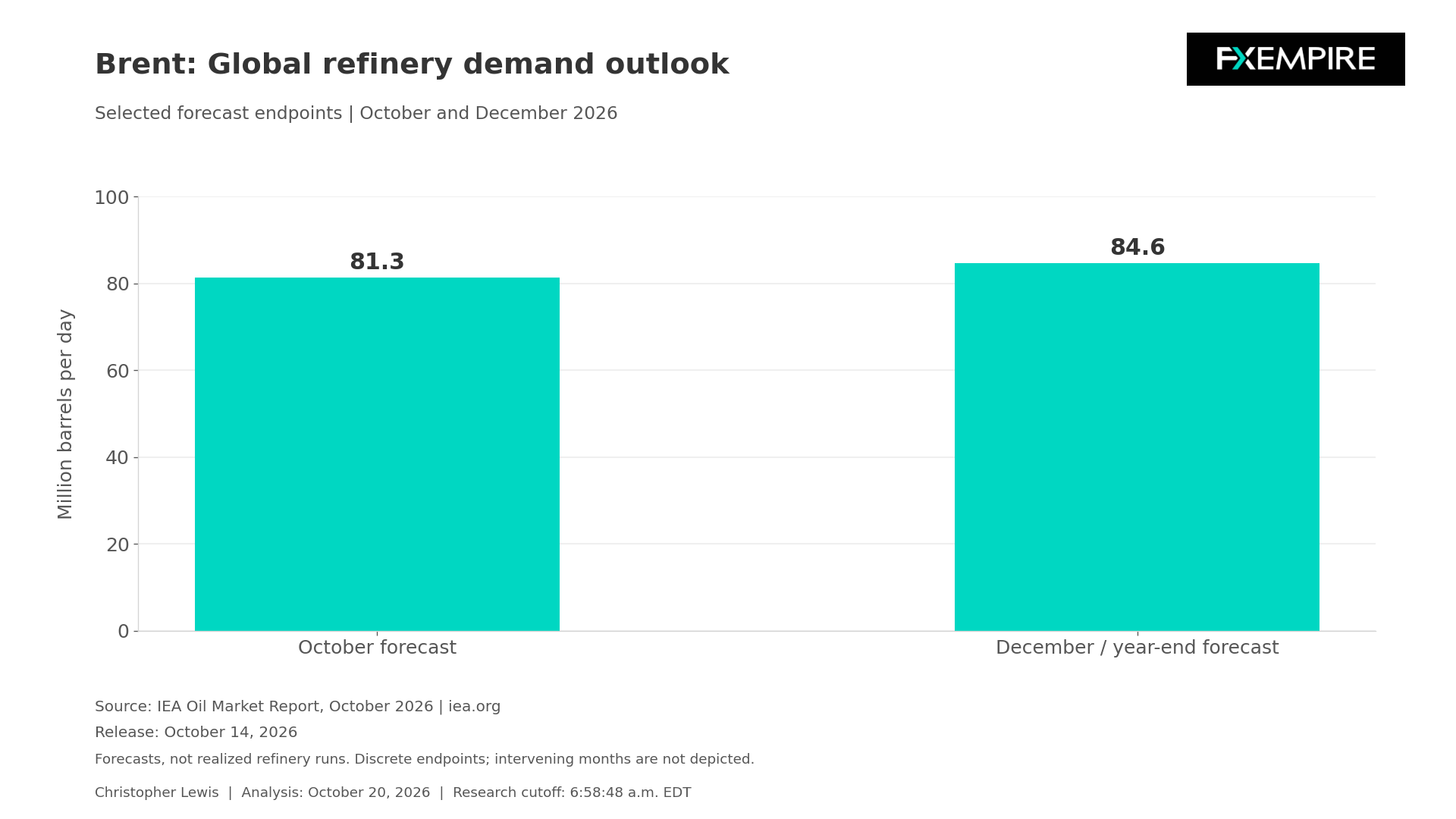
Refinery numbers offer an important transmission idea as well, with the IEA forecasting global refinery runs of 81.3 million barrels per day in October, recovering to 84.6 million by year-end. It had reported that September diesel exports were 700,000 barrels per day below the numbers from a year ago. This describes a couple of different things: anticipated processing and an observed estimate of product being traded.
China
The same report forecasts world oil consumption falling by 2.6 million barrels per day on average in 2026. China’s October 19 official release shows September industrial activity expanding, but first nine-month fixed investment declining by 7.2% year over year. Production resilience alongside weak investment is an uneven demand signal.
OPEC Statement
OPEC’s October 4 statement says seven participating countries will maintain September required production levels for November, with their next meeting being on November 1. Policy requirements and a meeting schedule are released, but this is not verified November output or completed deliveries quite yet. Actual production and export evidence will determine how much that decision changes physical availability.
Refineries
For Brent, the constructive scenario is continued product scarcity combined with slow normalization of transport. The weaker scenario is that recovering supply reaches buyers and consumption softens. WTI is connected through U.S. exports and competing refinery feedstocks. American inventory changes cannot alone establish the international balance. Watch for delivered supply and product availability before treating production recovery as a return to normal conditions.
As things stand right now, Brent is breaking above a major swing high from early September, and it does look as if it is trying to challenge the $115 level. This is very much like the WTI market. It is more buy-on-the-dip than anything else, although with the caveat that there is a premium for pricing Brent.