


Something Strange Is Happening Across Global Markets — And I’m Not Sure What It Means Yet
I’ve been watching some unusual movement in global stock markets overnight. The patterns are intriguing, but I haven’t figured out what they’re telling me yet. I’m looking for relationships between the major global indexes to understand who’s leading and who’s following. Asian markets sold off overnight Wednesday, particularly software and IT stocks. Japan’s TIS plunged 16% and India’s major IT firms dropped 6-8%. But then European markets opened higher Wednesday morning, which caught me off guard. U.S. futures are hovering near flat. There’s still time before the U.S. cash market opens, but it’s something to watch to see if the volatility grows legs.
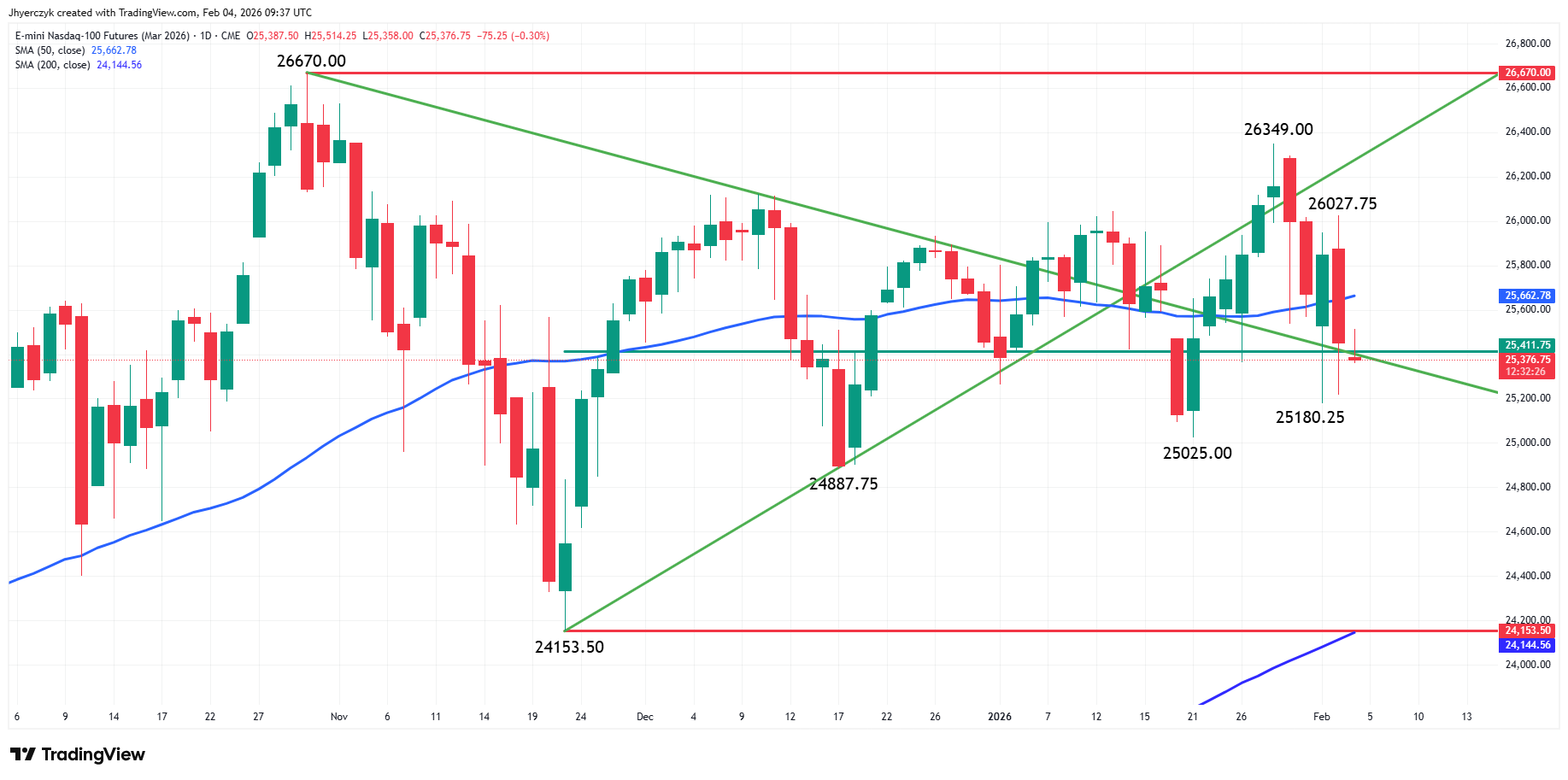
Was yesterday’s action a sign of what’s coming? On Tuesday, February 3rd, the Dow briefly touched a fresh record high before closing down 0.3%. The S&P 500 fell 0.8% and the tech-heavy Nasdaq plunged 1.4%. This kind of divergence doesn’t happen every day.

Tech Gets Hammered — Old Economy Stocks Hit New Highs
The big story seems to be a massive rotation out of technology stocks, especially software companies. Apparently Anthropic rolled out new automation tools for its Cowork product and that’s got everyone spooked that AI will disrupt traditional software business models.
ServiceNow is down 28% year-to-date, Salesforce has fallen 26%, and Intuit has dropped 34%. Those are brutal declines. Meanwhile “old economy” stocks like Caterpillar are hitting all-time highs.
With Alphabet and Amazon reporting earnings Thursday, things could go either way. If they show strong AI monetization, maybe tech bounces back. If they disappoint or sound cautious, this could get worse.
Nasdaq Breaks Below 50-Day MA — Is This Time Different?
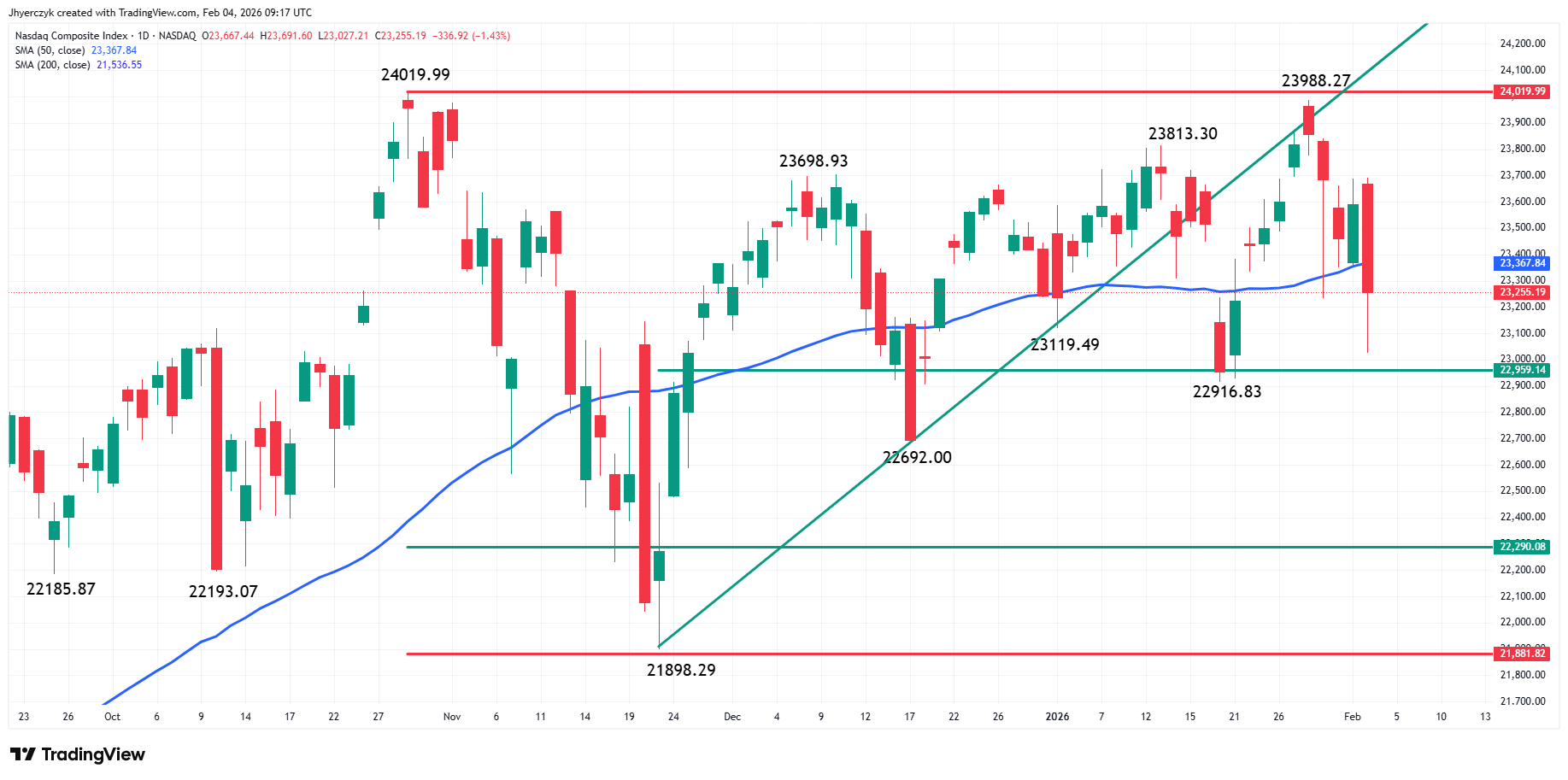
Tuesday’s close below the 50-day moving average at 23367.84 is telling for the Nasdaq Composite Index (IXIC). Since late November, we’ve seen this indicator penetrated four times, only to lead to a quick recovery and nearly another record high. We’re going to be watching the reaction this time closely.
Crossing to the weak side of a 50% level at 22959.14 and taking out the January 20 main bottom at 22916.83 will indicate strong selling pressure. That could even lead to an acceleration into the December 17 bottom at 22692.00, and in the worst case scenario, the November 21 bottom at 21898.29.
Recovering the 50-day moving average will bring some relief to the market, but conditions won’t feel right unless Alphabet and Amazon right the ship.
VIX Says People Are Nervous — But Not Panicking Yet
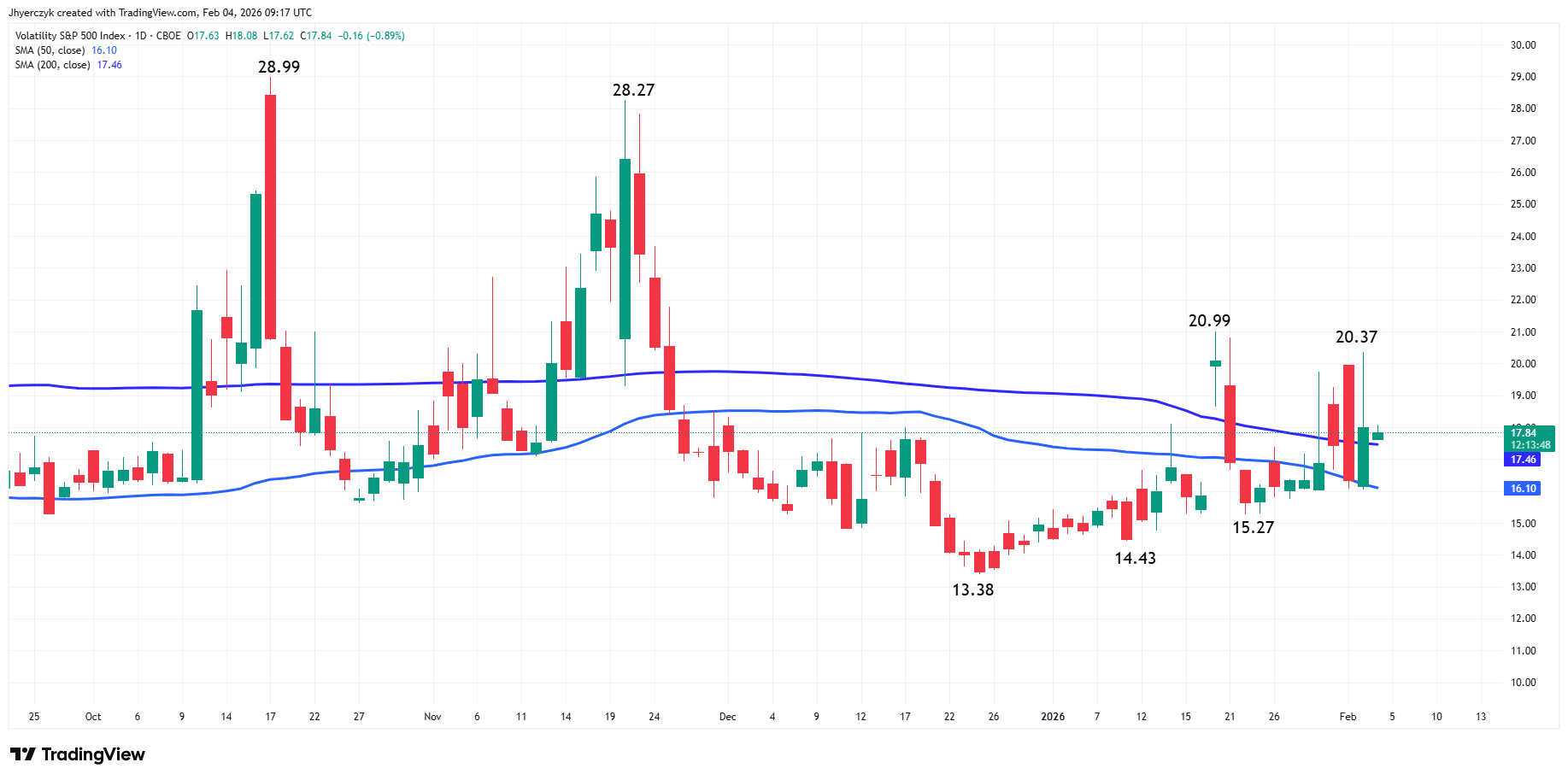
The VIX is telling us something. On Tuesday, February 3rd, it rose to 20.37, its highest level since January 21, before closing at 18.00, up 1.66 or 10.16%. That’s elevated but not full-on panic mode. Still, people are clearly nervous and hedging their bets.
Is This Healthy Broadening or the Start of a Real Tech Correction?
So is this a healthy market broadening out, or are we watching the start of a real tech sector correction? Like I said, I’m not seeing a panic yet. I could just be witnessing a massive rotation. Usually when there’s smoke, stock investors sell first and ask questions later. I’m not seeing that either, but conditions could change quickly after the Amazon and Alphabet earnings releases.
More Information in our Economic Calendar.


