



Key Points
- China’s economic growth missed expectations, raising concerns about future oil demand.
- The strong U.S. dollar has made dollar-denominated assets like crude oil more expensive for foreign buyers.
- Despite a slowdown in the broader economy, Chinese oil refinery activity remains strong, hinting at sustained demand.
China’s Economic Woes and Dollar Strength Affect Oil
Oil prices dipped on Wednesday as China’s economic growth fell short of expectations, raising concerns about future demand. Additionally, the strength of the U.S. dollar dampened investor risk appetite by making dollar-denominated assets like crude oil more expensive to foreign buyers.
At 06:58 GMT, Light Crude Oil Futures are trading $71.82, down $0.58 or -0.80%.

China’s Growth Shortfall
China’s economic growth for the fourth quarter registered at 5.2%, missing the mark set by analysts. This underperformance is casting shadows over the anticipated role of Chinese demand in driving global oil growth in 2024. The projections for China’s economic health in the next two years are clouded with uncertainty, despite expectations of robust oil demand.
Chinese Refinery Activity Remains Strong
In contrast to the broader economic slowdown, China’s oil refinery throughput in 2023 surged by 9.3% compared to the previous year, hitting a new high. This suggests sustained, if not burgeoning, oil demand. Chinese refiners are stocking up on oil for the upcoming months, anticipating a pickup in demand later in the year.
Dollar Strength Impacts Oil Market
The U.S. dollar’s rise to near one-month highs has affected global oil markets. With the dollar gaining strength, particularly following Federal Reserve officials’ hints at a more cautious approach to interest rate cuts, oil becomes more expensive for holders of other currencies. This shift has been further fueled by Federal Reserve Governor Christopher Waller’s comments, which have tempered expectations for a March rate cut, impacting the dollar index.
Fed’s Rate Cut Stance and Global Impact
While the Fed’s current position aligns more realistically with market expectations, significant rate cuts are still anticipated in 2024. The oil market, along with global financial markets, is closely monitoring statements from key figures like ECB President Christine Lagarde, which could sway market sentiments and pricing strategies.
Geopolitical Factors: Red Sea Tensions
Developments in the Red Sea, including strikes against Iran-aligned forces in Yemen and consequent rerouting of oil tankers, are on the market’s radar. While these events have not significantly impacted oil benchmarks, they are causing a ripple effect in oil and product prices, particularly through trade flow disruptions in the Red Sea and Suez Canal regions.
Short-Term Outlook: Bearish
Trend Considering China’s economic slowdown, the strengthening U.S. dollar, and a cautious approach from the Fed regarding rate cuts, the short-term outlook for the oil market is bearish. These factors collectively dampen demand prospects and suggest a period of subdued oil prices. Traders will be focusing on today’s U.S. retail sales report to see if it strengthens or weakens the dollar. Traders should also remain vigilant and factor in these global economic and geopolitical elements in their strategies.
Technical Analysis
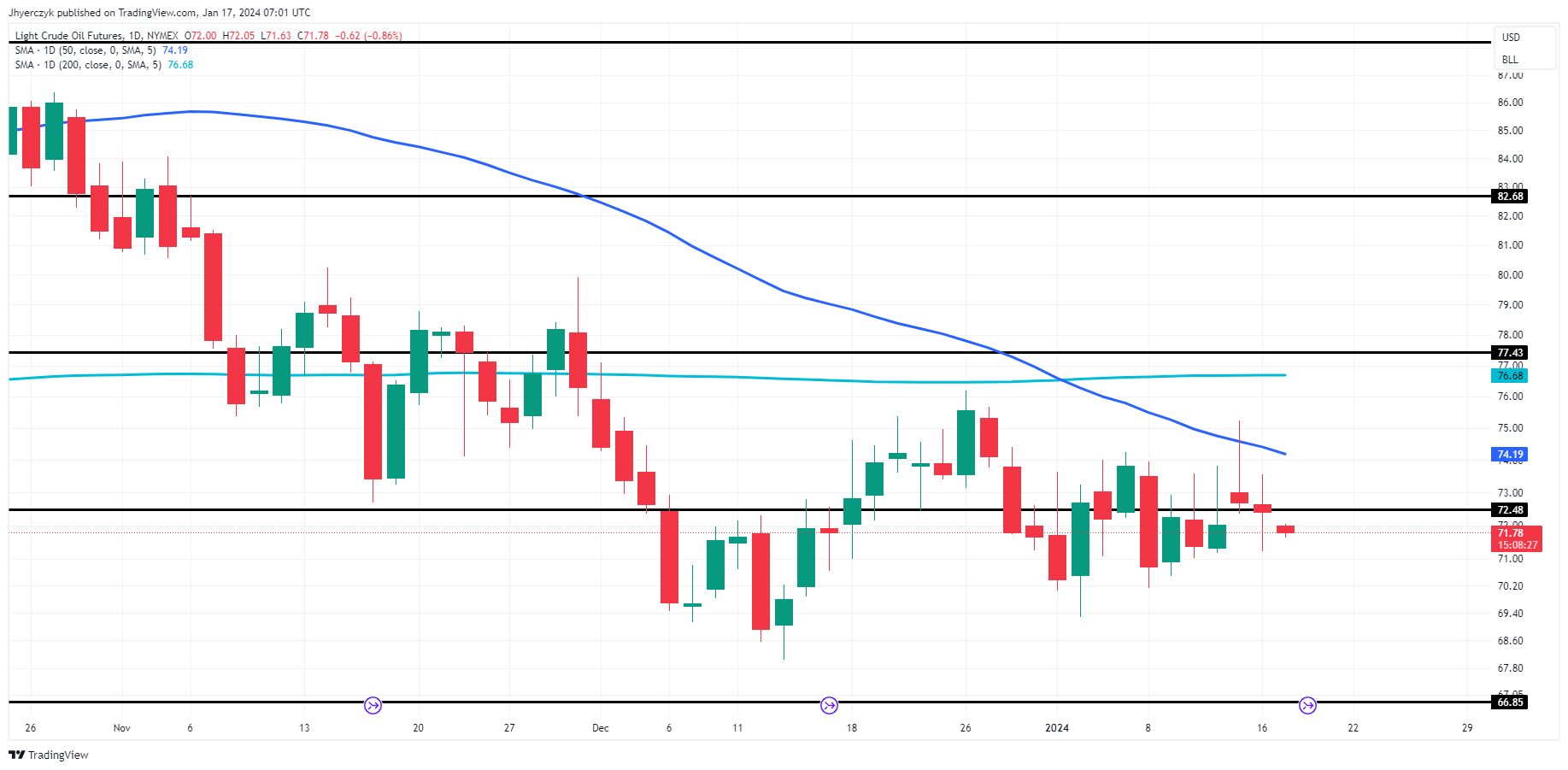
In terms of support and resistance, the key level to watch is the pivot at $72.48. This level appears to be controlling the near-term direction of the market. A sustained trade below this level will be a sign of weakness.
In conclusion, the market sentiment appears to be bearish given the price’s position below the moving averages and the pivot.


