
Home Depot Delivers but the 30-Year Yield Still Has the Final Word
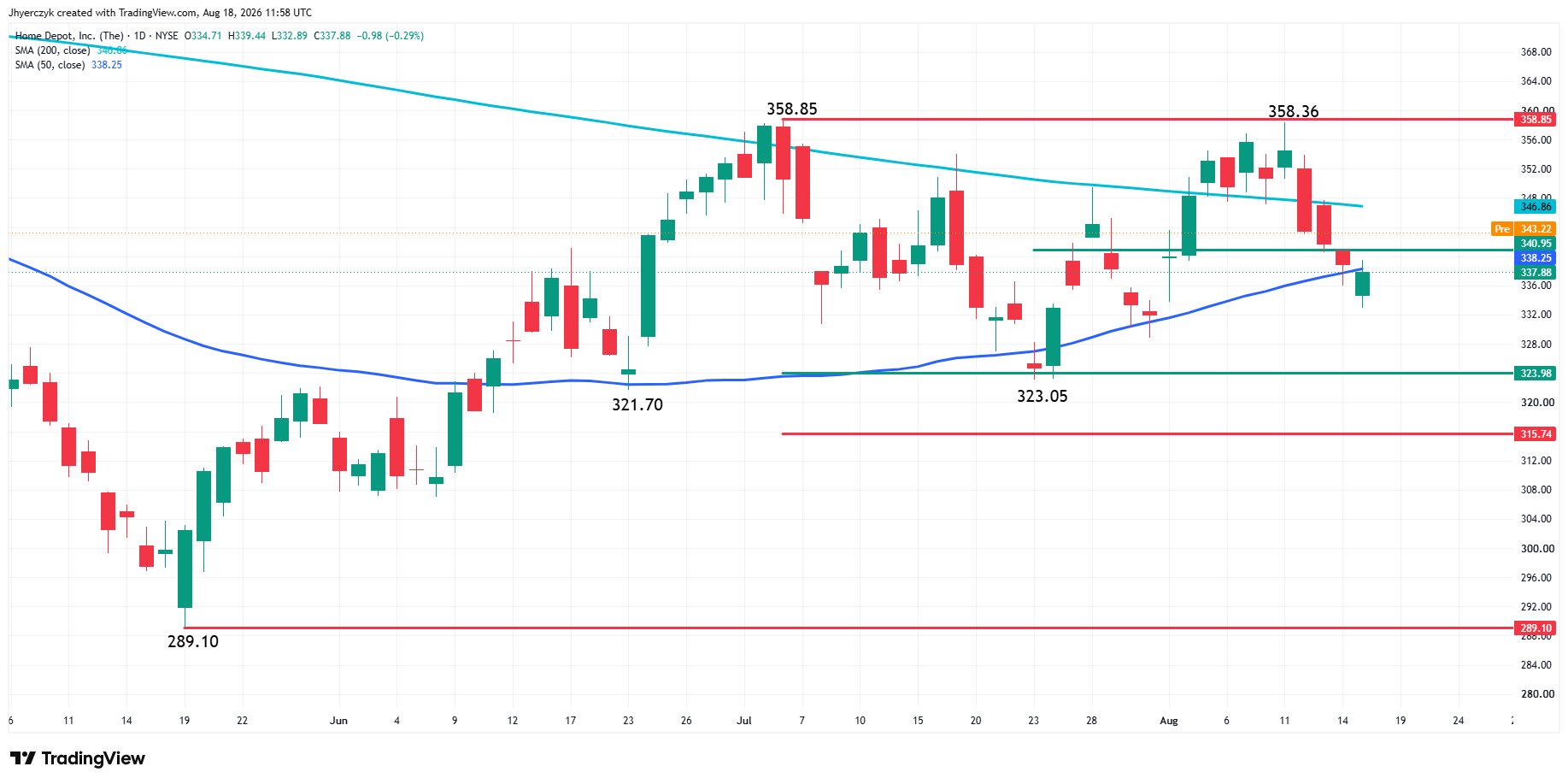
Home Depot beat on earnings and revenue and reaffirmed full-year guidance. That gives the Dow a consumer win after last week’s soft retail sales raised questions about whether spending was cracking. The stock gained 1.5% before the opening and is set to gap above its 50-day moving average.
The problem is what happened overnight. S&P 500 futures broke the last bottom before the all-time high and shifted minor momentum to the downside. The 30-year Treasury yield is still above 5.3%, the highest level in nearly two decades, and a clean earnings beat from a blue-chip retailer is not enough to fix the borrowing cost problem that is keeping the broader market from building on last week’s record.
Monday’s chip leaders are giving back the move. Micron and SK Hynix were each down more than 4% before the bell. Fabrinet fell more than 9% despite beating on earnings because traders focused on a margin warning instead of the revenue number. The AI trade is getting more selective.

Home Depot Beat Gives Buyers a Consumer Name Outside the AI Trade
Home Depot reported adjusted earnings of $4.92 per share, above the $4.73 estimate. Revenue came in at $47.86 billion, topping expectations for $47.27 billion. The company reaffirmed full-year guidance without giving traders the kind of cautionary language that would signal a pullback in household spending.
That matters after last week’s retail sales miss. Home Depot is not a read on every part of the consumer. It is a read on homeowners, housing turnover and larger household projects. The reaffirmed guidance says that side of the economy is not deteriorating the way the headline retail number suggested.
The report also gives the market an earnings winner that does not depend on AI spending or chip demand. Monday had memory stocks carrying the Nasdaq while the Dow and S&P dealt with higher oil and long-bond selling. Home Depot gives buyers a different reason to stay in the market.
Home Depot is expected to gap higher on the opening with traders targeting the $343.00 level. If the rally extends beyond the opening, look for a test of the 200-day moving average at $346.86. This will be decision time for investors because the last two times the market moved above the 200-day MA, it produced tops at $358.36 and $358.85.
The new support is a 50% level at $340.95 and the 50-day moving average at $338.25. Yesterday, Home Depot closed below this indicator, and today it’s going to gap over it. Nonetheless, it remains a key area to watch. A break back under it could lead to a near-term test of a major retracement zone at $323.98 to $315.74.
Daily September E-mini S&P 500 Index Futures Technical Analysis
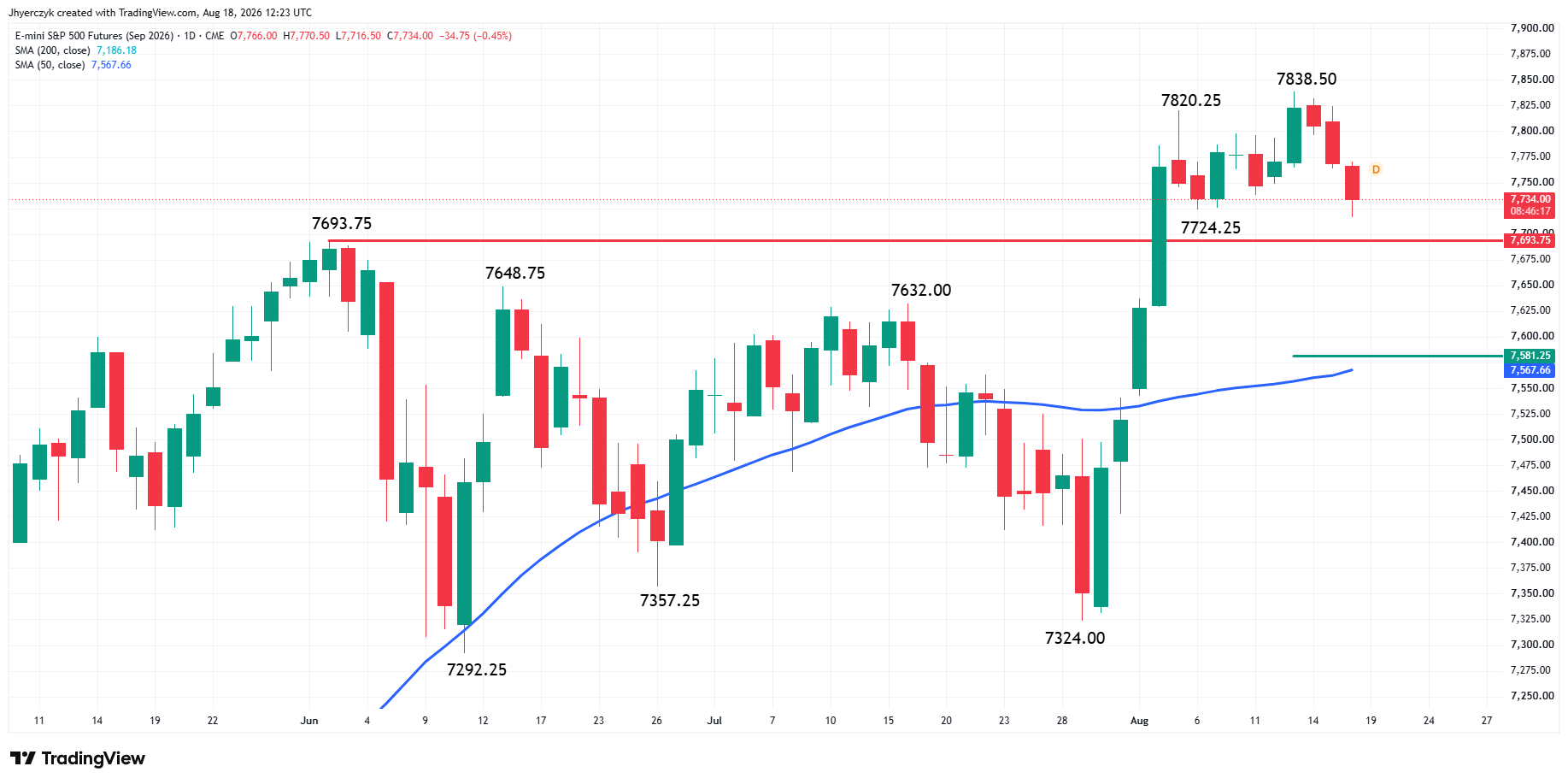
September E-mini S&P 500 Index futures are expected to open lower on Tuesday based on the overnight trade. Early in the session, the benchmark index broke the last bottom before the all-time high at 7838.50. The move changed the minor trend to down and shifted momentum to the downside.
The next downside target is the previous record high at 7693.75. We could see buyers return on the first test, but if it fails as support, then traders will start looking at a 50% level at 7581.25 and the 50-day moving average at 7567.72 as the next major targets.
The 30-Year Yield Is Still Pricing Deficits and Debt Supply
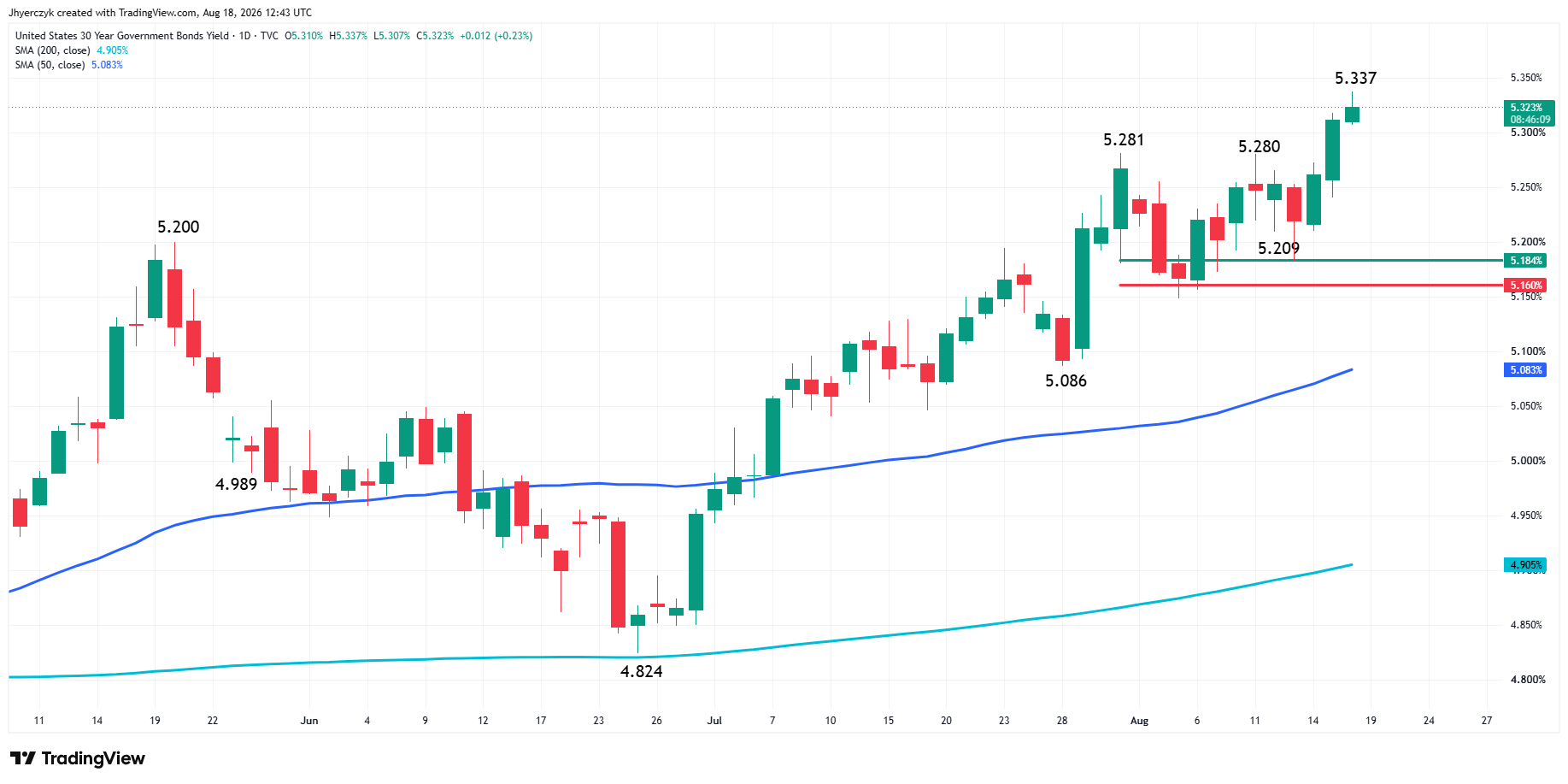
The yield curve split has not changed. The two-year is holding around 4.2% after weaker data cut September hike odds near one in three. The 30-year pushed above 5.3% Monday, its highest level in nearly two decades, and is still there Tuesday morning.
The front end sees less reason for the Fed to tighten. The long end is pricing large federal deficits, heavy Treasury issuance, corporate borrowing for AI infrastructure and inflation that remains above the 2% target. That is the ceiling over the broader market. Home Depot’s earnings beat needs long yields to ease before it can turn into anything more than a single-stock move.
Monday’s Chip Leaders Are Giving Back the Move
Micron and SK Hynix were each down more than 4% before the opening. Sandisk also fell more than 4%. The group rallied Monday on the Lutnick headline about Chinese memory chips and the Anthropic revenue number. Tuesday’s premarket says buyers are taking profits rather than chasing the policy headline into a second session.
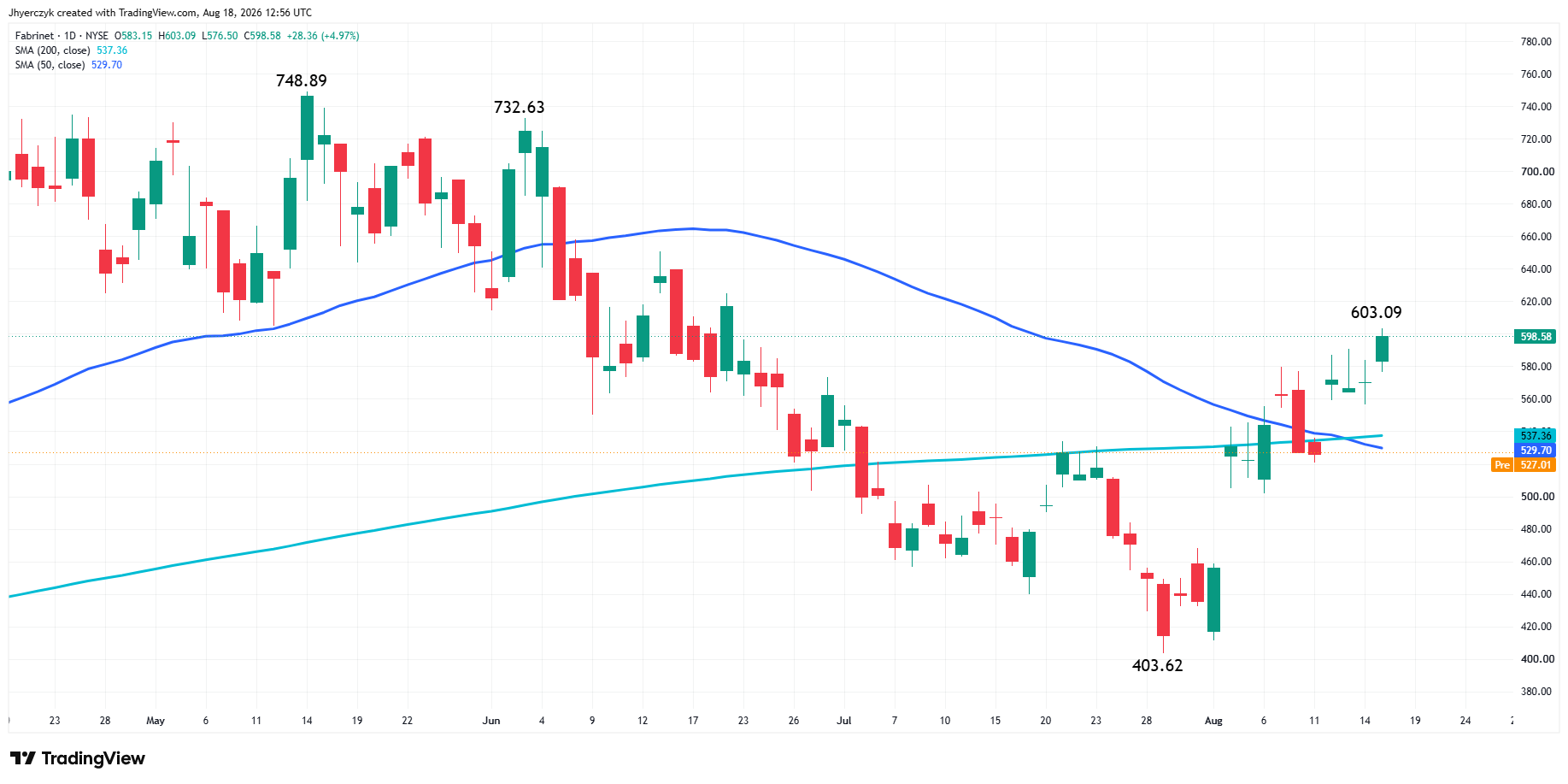
Fabrinet is the harder read. The optical-products maker fell more than 9% despite beating on earnings and revenue and issuing strong guidance. Traders sold the stock after a warning that normal first-quarter expense seasonality would create a temporary margin headwind. Revenue beats still matter in the AI trade. Margin pressure matters more when valuations are already stretched.
Stocks in the News
Lowe’s reports earnings Wednesday. Walmart follows Thursday. Tesla slipped after a report that it is preparing an August launch of its Cybercab robotaxi. Duolingo gained after D.A. Davidson upgraded the stock to buy.
What to Watch
Home Depot gave the consumer trade a clean result. The question is whether the 30-year yield lets the market do anything with it. Long yields above 5.3% are a ceiling that one earnings beat cannot break through, and the S&P shifted to minor downside momentum overnight. The bond market has deficits, heavy issuance and inflation above target on its side. Home Depot has guidance and a consumer that is not collapsing. Those two stories are competing for control of the tape this week.
The S&P broke the last bottom before the record high and is pointing lower into the opening. Home Depot is gapping toward its 200-day moving average, which has produced two tops in a row. The broader market needs long yields to ease before individual earnings wins can spread into a broader bid. Until the bond market cooperates, good quarters are single-stock trades.
More Information in our Economic Calendar.