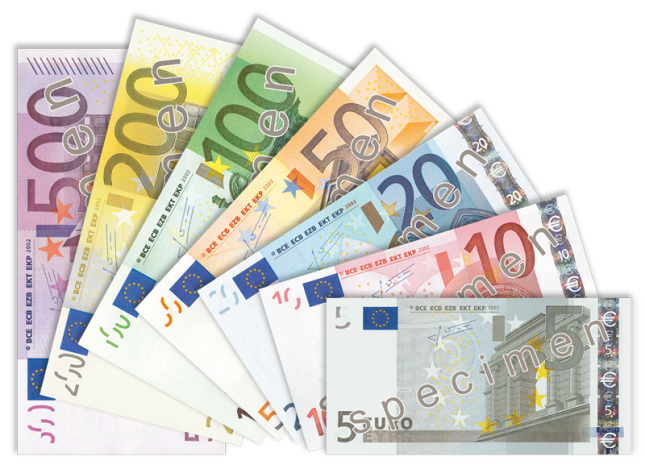
The euro has reacted positively to the raft of measures that were released by the European Central Bank (ECB) yesterday.
After 6PM GMT last night, the euro was buying just under the $1.1 mark, the highest its been since early November, representing a steep rise from the previous level of $1.05.
Recently the euro has fallen regularly below buying $1.6, and has been at the lowest level of comparative value to the dollar since April.
Against the pound the euro also jumped up, climbing to buying £0.725 yesterday evening, mirroring the euro’s relationship with the dollar, and is now at its highest level in opposition to the pound since October.
Euro Also Moves Up Against Major Asian Currencies
The euro is now buying RMB7, and is the highest rate that it has been for six weeks against the Yuan. Since the beginning of October the euro had precipitously fallen from buying just under the RMB7.3 mark to just below RMB 6.8.
The Japanese Yen also suffered from the strengthening of the euro, as the euro bounced up to over Y134, a near Y4 rise in the space of five hours yesterday afternoon.
As today has progressed, the euro has maintained its higher rate against the Yen, and is now currently buying Y133.5.
ECB Cuts Deposit Rate and Extends Quantitative Easing
As expected the ECB cut the deposit rates to 0.2% to 0.3%, in the attempt to prompt banks to lend at an accelerated pace.
The main other headline move was to extend the asset purchasing programme under Quantitative Easing (QE) to March 2017, and the ECB is prepared to further that extension if the conditions merit it.
In a change of policy direction, the assets that can be purchased from QE has been broadened. As now the debts from local and regional government can now be bought under the programme.
The QE plan it is hoped will push inflation towards the ECB target of 2%, the flash estimate for inflation for November placed inflation at 0.1%, the same rate as the previous month.
Market opinion of the ECB policy meeting was not favourable, especially the decision to extend and not expand the EUR60 billion of QE per month.
Many analysts believe that the ECB have failed to take bolder measures, and the euro despite its recent surge, may suffer badly in the event of a rate hike in the United States.
Volume of Retail Trade Down in Euro Area
Meanwhile retail trade has fallen in the euro area by 0.1% for October compared to the figures from September.
While in the European Union, the retail sector had a disappointing month as for October it was stable at 0.0%, but this was a fall from the 0.3% level in September.
Year on year for October, the retail sales index rose by 2.5% and 3.1%, in the euro area and the European Union respectively.
From the member states, Poland celebrated the highest increase in retail trade with 2.1%, followed by Estonia with a 2% rise, then Latvia on 1.4%.