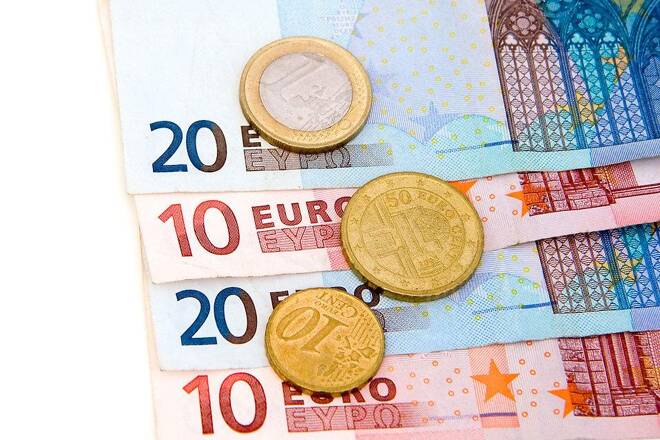
The euro has been halted from its recent appreciation against the US dollar, as it fell from buying at $1.09 yesterday morning, to $1.086 in the early hours of today GMT.
As the morning has progressed, the euro has created some more downward pressure on the dollar, currently buying $1.088.
Low oil prices is thought to be one of the major reasons why the dollar has slipped against the euro.
Since November, the price of Brent Crude oil according to NASDAQ has plummeted from just over $50 per barrel, down to the current price of $29.30 per barrel.
There will be more important economic news from the United States released tomorrow, as the latest inflation figures are set to be announced.
A survey released by CNBC, revealed that fears of a recession in the United States are the highest they have been since the autumn of 2011.
Euro May Suffer as Chinese Economic Growth Falls
China’s economy grew by 6.9% for last year, the slowest growth they have recorded for a quarter of a century.
The economy dipped by 0.4% when compared with 2014. Despite the news, the Shanghai Composite moved upwards to 3,008 a the close of trading today, but still remains significantly down from the 3, 539 level, for the end of last year.
As China is the second largest export market for the euro area, 9.7% of the total amount of overseas trade, a fall in Chinese growth could hurt many suppliers.
The euro area could also be hurt by the devaluation of the yuan, which will crimp the spending power of Chinese companies for European goods and services.
Since last week, the euro has climbed up against the yuan, from buying just under RMB7.15 to over RMB 7.20.
Over the past 24 hours GMT, the euro has fallen to buying RMB7.16 from RMB 7.19, after the news was announced from Beijing.
Inflation Rises in the UK and Germany
UK inflation has risen to an 11 month high of 0.2% for December last year, the latest data from the UK’s Office of National Statistics has disclosed.
The Consumer Prices Index rose by 0.1% in comparison to November, the main contributors to this were the increase in prices to transport costs, in particular air fares and to a lesser extent motor fuels.
There was also downward pressures on prices, as alcohol and tobacco alongside food and non alcoholic drink costs offset the hike in transport prices.
In Germany, official figures reported an increase of 0.3% in consumer prices for the whole of last year, compared to 2014.
Despite this rise, year on year consumer prices have been increasing at a slower rate since 2011, when the annual price comparison reached 2.1%.
Falling energy prices was the main driver of consumer costs only rising by a slender amount, an energy fees were reduced by 7% from 2014.
This was a sharper decline than in recent years, unsurprisingly the low crude oil prices was the most responsible for this trend.
Food prices did increase by 0.8% for last year, with marked hikes in costs for fruit and vegetables, which rose by 5% and 5.3% respectively.

Other goods which became more expensive include newspapers and periodicals which leaped up by 5.9%, coffee, tea, cocoa increased 5.5%, and tobacco products 4%.