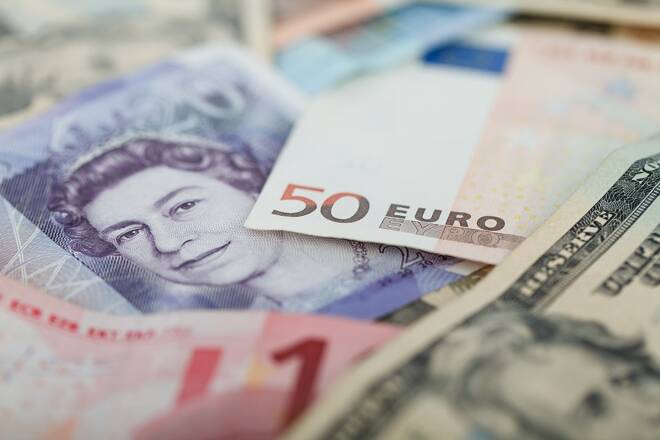
The UK pound and the euro have both come under increasing pressure in the currency markets, as trading quietens down for the Easter vacation.
Against the US dollar, the pound has continued to fall from yesterday, and is currently buying $1.40, having dropped from over $1.41, as trading began today GMT.
Sterling has also depreciated against the euro in a similar fashion to its relationship with the greenback.
At the start of play GMT, the pound was buying EUR 1.263, and now has declined to purchasing EUR 1.25.
The ongoing saga over the potential exit from the European Union, continues to be a dark cloud over the performance of the pound.
And there has been increasing concern about the UK’s economic figures, inflation is only stable at 0.3%, coupled with chancellor George Osborne cutting growth figures the next five years, starting by reducing expectations for this year by 0,.4% down to 2%.
The euro has continued to struggle against the US dollar, as there has been a sustained effect on the euro following the terrorist attacks in Brussels.
So far today GMT, the euro has had turbulent relationship with the dollar, starting the day buying $1.118, before falling to $1.115, and has now climbed to $1.116.
In their daily round up, Societe Generale said that there was not much room for optimism on the economic front for the euro.
And there’s still division within the ECB about whether to go any further with monetary policy, the bank opined.
This is following the decisions made in the Governing Council’s meeting earlier this month, which increased their asset purchasing programme by EUR 20 billion per month.
The debate about ‘helicopter money’ or easier fiscal policy is pretty irrelevant within the euro area Societe Generale concluded, in effect the euro trades its range, a little weaker at the moment, but not by a catastrophic amount.
UK Retail Sales Fall
Official data from the UK’s Office for National Statistics, has revealed that sales in the retail sector are down by 0.4% month on month in February this year, compared to January.
The amount spent by consumers year on year increased by 1.4% , but decreased by 0.7% compared to January, when the post holiday sales are in full flow.
Overall, there has been year on year sales growth for 34 consecutive months.
The volume of sales increased by 3.8% for February this year, compared to the corresponding month a year ago.
While average store prices, including petrol stations, fell by a year on year 2.5% in February 2016, this is now the twentieth consecutive month of year on year price falls.
Strong Real Earnings Increase in Germany
Real earnings in Germany have risen strongly by 2.4% for 2015, compared the previous year, federal statistics disclosed.
This was the largest increase in the index of real earnings, recorded since earnings records began in 2008.
The growth was achieved by moderate consumer prices, and an increase in nominal earnings of 2.7%, a higher average in contrast to the previous five years.

There was further positive news, as the German construction industry has recorded an increase in new orders by 1% in January, from December last year.