Thursday’s Record Did Not Bring Buyers Back Friday
The S&P 500 made an intraday record at 7,816.70 Thursday and closed at a record. Friday’s session answered the question of whether the market had more to give. It did not. Broadcom and Applied Materials are pulling the semiconductor group lower on a day when the Nasdaq needed them to hold.
Retail sales fell unexpectedly. Consumer sentiment missed. Oil is rising as Hormuz traffic moves closer to a standstill. The record attracted sellers, not buyers, and the combination of weaker data and higher crude is the worst possible setup for the growth stocks that led the market to the high.
At 17:43 GMT, the Dow Jones Industrial Average was down 139.58 points or 0.26% at 53,700.41. The S&P 500 was down 21.92 points or 0.28% at 7,777.07. The Nasdaq Composite was down 124.35 points or 0.46% at 26,678.67.

Daily Nasdaq Composite Index (IXIC) Technical Analysis
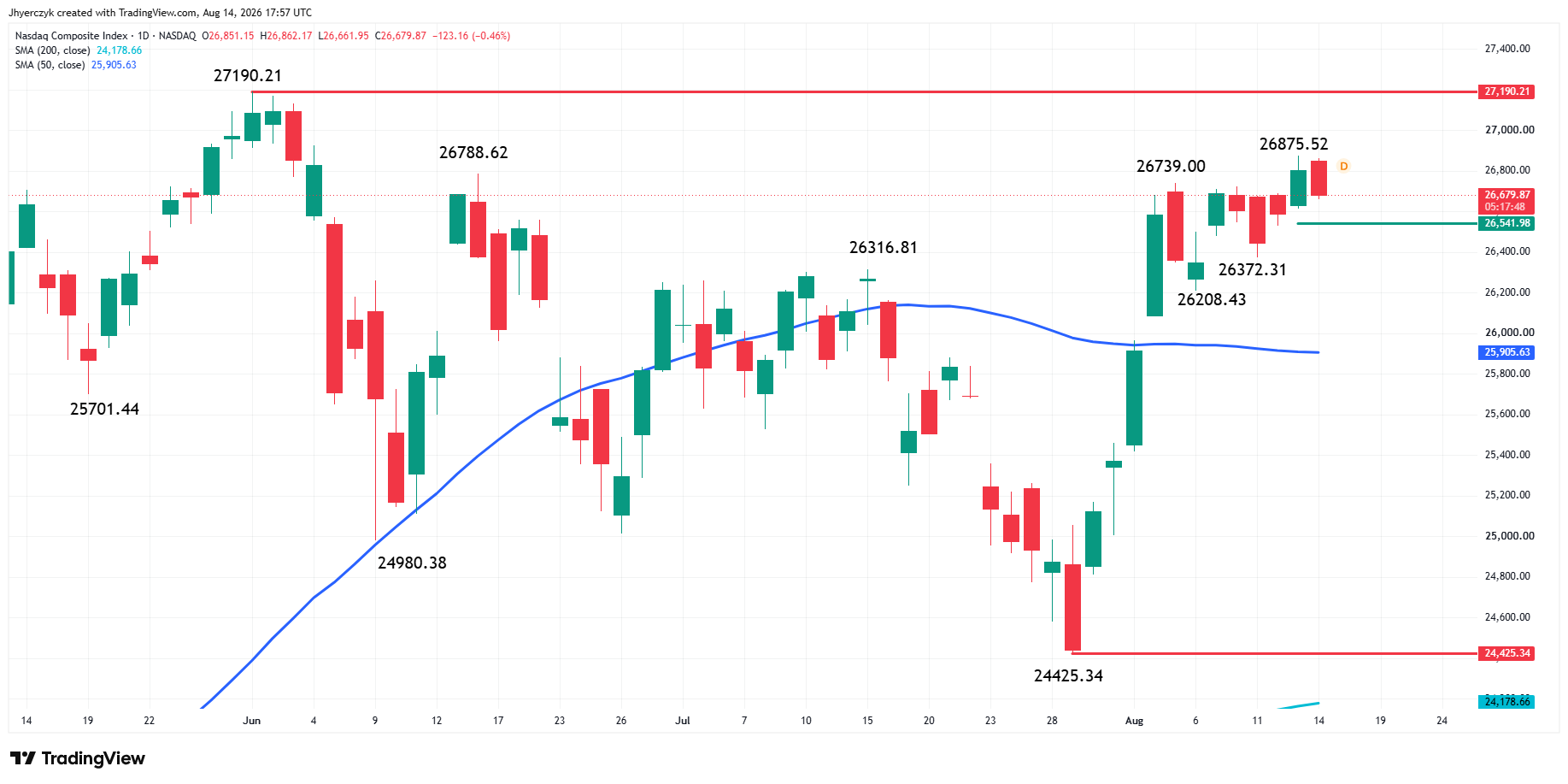
The Nasdaq Composite Index is trading lower late in the session on Friday. Sellers came in early when buyers failed to take out yesterday’s high at 26875.52. The selling is picking up as we approach the close with yesterday’s low at 26612.85 the first target. The minor range is 26208.43 to 26875.52. Its 50% level at 26541.98 is the second target.
The minor trend will change to down on a trade through 26372.31.
Daily S&P 500 Index (SPX) Technical Analysis
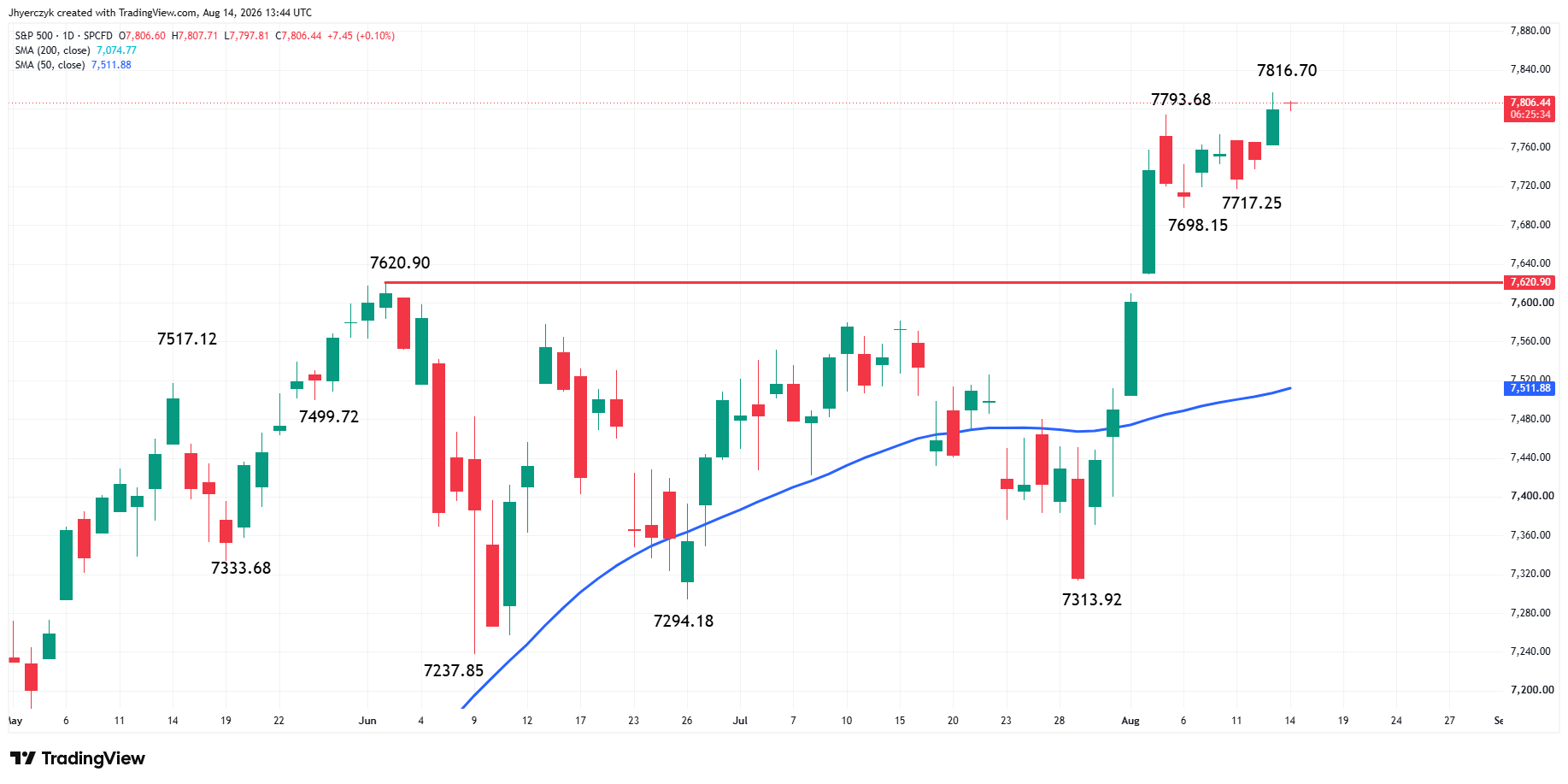
The daily S&P 500 Index is edging lower on Friday. The market is posting an inside move, which typically indicates investor indecision and impending volatility. The selling started early in the session when traders failed to extend the rally through 7816.70.
The first downside target is a minor 50% level at 7766.97, followed by the next target at 7757.42. A trade through 7717.25 will change the minor trend to down and shift momentum to the downside.
Dow Jones Price Forecast
Every new Dow Jones analysis as it publishes, today's technical signal and key levels, live price — on one page.
See all Dow Jones forecastsBroadcom and Applied Materials Are Dragging the Chip Group Down
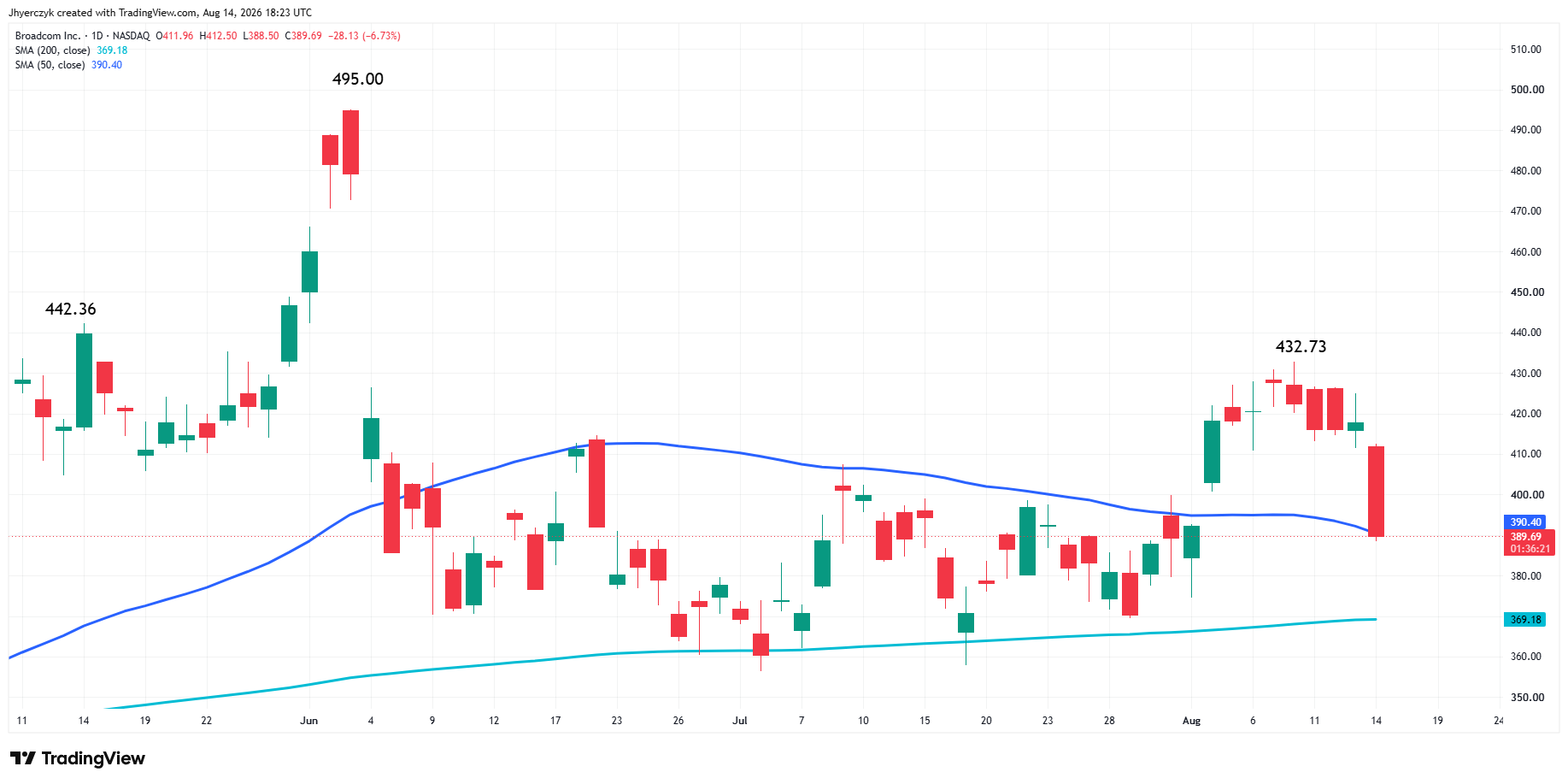
Broadcom is off 5.5% and carrying the heaviest weight in the S&P 500 technology sector, which is down 0.5%. Applied Materials forecast fourth-quarter revenue above estimates and still got sold 5.2%. The Philadelphia Semiconductor Index is lower by about 1%. When a chip-equipment maker beats the revenue test and the market sells it anyway, traders are taking money off the table after a strong run, not reacting to the earnings.
Sandisk is up 5.7% and Western Digital gained 1.4%. The memory side is holding while the broader semiconductor group gets hit. That is a narrow market choosing pieces of the supply chain, not a clean technology exit.
Breadth backs that up. Advancing issues are outnumbering decliners 1.13-to-1 on both exchanges. The S&P 500 posted 12 new 52-week highs against one new low. The Nasdaq recorded 68 new highs and 47 new lows. The selling is concentrated in the biggest names, not spread across the index.
Retail Sales and Consumer Sentiment Raise a Growth Question the Market Did Not Have Thursday
July retail sales fell unexpectedly after rising 0.2% in June. The University of Michigan’s preliminary consumer-sentiment reading came in at 51 against a 54.5 estimate. Neither number is a crisis. Both tell you the consumer is not as strong as the record close implied.
The inflation reports earlier this week made a September hold more likely. Friday’s data adds a growth problem to the same conversation. The market wanted softer inflation to give the Fed room to stand pat. It got softer inflation and a weaker consumer on the same week, and now it has to price both at the same time.
Hormuz Is Getting Worse and Energy Is the Only Sector in the Green
The S&P 500 energy sector is up 1.5%. The United States said it could maintain a naval blockade of Iran indefinitely. Two more vessels were attacked near the strait. Traffic is approaching a standstill.
The CPI and PPI reports this week came in contained partly because gasoline prices fell in July and the late-month oil surge had not yet reached the data. Friday’s developments put the focus on the next round of inflation readings instead. Energy stocks are rising because the market is pricing a longer disruption. Technology stocks are falling because the same disruption threatens the lower-rate environment that carried the Nasdaq to Thursday’s high.
Reddit Holds Its S&P 500 Inclusion Gain
Reddit is up more than 12% after being named as a new S&P 500 addition effective August 18. The inclusion brings passive-fund demand into the stock and traders are front-running the rebalance. The move is doing exactly what an index-addition trade is supposed to do. It is not carrying the broader market because Friday’s story is chips, the consumer and oil.
Stocks in the News
Workday fell after reports that Silver Lake is in talks to acquire the software company. Red Cat and Unusual Machines surged after President Trump said the United States would impose tariffs on drone imports and components.
What to Watch
Thursday’s record did not produce follow-through. Broadcom and Applied Materials are pulling technology lower. Retail sales and consumer sentiment are raising growth questions. Oil is climbing as Hormuz traffic deteriorates. The bulls still have strong second-quarter earnings with growth tracking around 50% and a Fed that looks less likely to hike after this week’s inflation data. The bears have a weaker consumer and crude that can rebuild the inflation argument before the next round of data lands.
The S&P 500 is posting an inside move below Thursday’s record. The Nasdaq failed to take out yesterday’s high and selling is accelerating into the close. A trade through the minor trend levels shifts momentum to the downside. The close tells you whether the record was a level buyers want to defend or the point where they decided to take profits heading into the weekend.
More Information in our Economic Calendar.